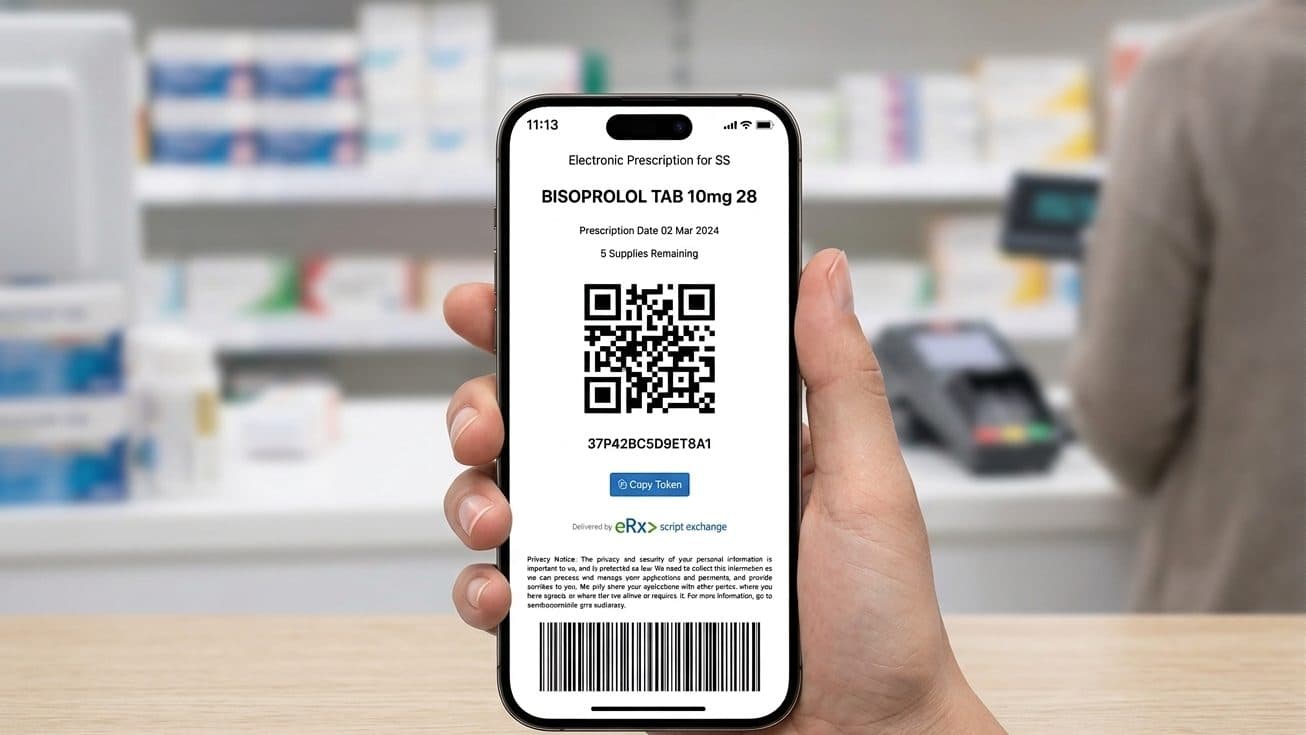
A 60-day prescription provides two months of an eligible medicine for one co-payment. It is available for a range of medicines on the Pharmaceutical Benefits Scheme (PBS) used for stable, ongoing conditions, but the prescriber decides whether it is appropriate for the patient and the medicine (60-day prescriptions, Department of Health, Disability and Ageing).
General information, not medical advice
This guide explains how things work in general. It cannot tell you what is right for you, so check anything that affects you with your pharmacist or GP.
Always read the label and follow the directions for use.
Based on official Australian government and health sources. Rules can change.
For someone who would otherwise receive 30 days at a time, this can mean fewer pharmacy visits and fewer co-payments. This guide explains eligibility, 2026 costs, repeats and the effect on PBS Safety Net spending, and sits alongside the wider system covered in our guide to prescriptions in Australia.
How a 60-day prescription works
A 60-day prescription is one prescription that authorises two months' supply of your medicine at each fill, rather than the older one-month quantity. The Department of Health, Disability and Ageing describes it as receiving twice the medication on a single prescription so it lasts longer, supplied together rather than as two separate one-month fills. It remains one prescription with its usual repeats, and you pay one co-payment for the two months rather than two.
If your prescriber writes a 60-day script with five repeats, you receive two months each time and can fill it up to six times, which comes to about six pharmacy visits across the year instead of twelve. Our guide to repeat prescriptions explains how repeats work.
How it was introduced in three stages
The eligible list was phased in over twelve months, according to the Department of Health, arriving in three groups across the year.
Source: 60-day prescriptions information kit for prescribers, Department of Health.
Which medicines are eligible
Eligibility is set by the medicine, not by your prescriber. Only medicines on the eligible PBS list can be prescribed for 60 days, and the list is built around treatments for stable, long-term conditions where a two-month supply is considered safe.
The list covers medicines for many ongoing conditions, including common treatments for high blood pressure, high cholesterol and heart conditions, along with other chronic illnesses managed with a steady daily dose. Some medicines were deliberately kept at one-month supply, so a medicine's eligibility is worth confirming rather than assuming. Your GP or pharmacist can check it against the current PBS list.
The 60-day rule applies only to PBS prescriptions. A private prescription is written and priced differently, as our guide to private and PBS prescriptions explains.
When a shorter supply may suit you better
A 60-day supply is not automatic. The Department of Health, Disability and Ageing says the decision rests on your prescriber's clinical judgement, and there are times when a one-month supply is the safer choice.
Your prescriber may keep you on a one-month supply if your dose has changed recently, if you have a new diagnosis or a recent hospital stay linked to the medicine, if the medicine is for a short course rather than ongoing treatment, or if there is a reason a smaller quantity at home is safer for you. In some cases you might start on one-month fills while your dose is settled, then move to 60 days once it is stable. This is a conversation to have with your GP, not something you arrange at the pharmacy.
What a 60-day script costs in 2026
For most people the price of each fill does not change. You pay the standard PBS co-payment whether you collect one month or two. From 1st January 2026 the general co-payment is $25, down from $31.60, and the concession co-payment is $7.70, according to the Department of Health, Disability and Ageing. The saving comes from paying that co-payment half as often.
Take a general patient on one eligible medicine at the 2026 co-payment of $25 a fill. Twelve one-month fills come to $300 across the year, while six two-month fills come to $150, a yearly saving of up to $150. A concession patient paying $7.70 a fill saves in the same way: twelve one-month fills cost $92.40 across the year, while six two-month fills cost $46.20, a yearly saving of up to $46.20 on that medicine. These best-case figures assume you pay the full co-payment at every fill and have not reached the Safety Net. The PBS fees notes set the co-payment as a maximum, so a medicine priced below it saves less, and so does a year in which you reach the Safety Net. The Department of Health estimates the change helps more than 6 million Australians who need regular medication.
Source: derived from the 2026 co-payments in PBS co-payments, Department of Health: twelve fills a year against six, at the full co-payment and before the Safety Net.
To compare what the same script costs between pharmacies, see our script cost comparison guide.
What it means for your PBS Safety Net
The PBS Safety Net protects you once your family's medicine spending passes a yearly threshold. Every co-payment you make counts towards it once, and it counts the same whether that fill was one month or two.
Because a 60-day script means fewer fills, you make fewer co-payments across the year, so you reach the threshold more slowly. For 2026, the thresholds set under the PBS are $1,748.20 for general patients and $277.20 for concession cardholders, according to the PBS Safety Net notes, and they are normally adjusted on 1st January each year. Once you reach the threshold, general patients pay up to $7.70 an item for the rest of the calendar year and concession cardholders pay nothing, although any brand or therapeutic group premium still applies.
You make fewer co-payments across the year, so a family that spends heavily on medicines can reach the threshold later. Each co-payment still covers two months of medicine, so the total you pay on those medicines is usually lower.
If you are close to the threshold, your pharmacist can check your record and tell you how close you are.
At the pharmacy counter
Collecting a 60-day script looks the same as any other. You send the electronic prescription (eScript) token your prescriber texts or emails to your phone, or present a paper script. You then pay one co-payment and receive two months' supply.
| 30-day supply | 60-day supply | |
|---|---|---|
| Medicine per fill | One month | Two months |
| PBS co-payment per fill | $25 general, $7.70 concession | $25 general, $7.70 concession |
| Fills per year, one medicine | About 12 | About 6 |
| Pharmacy visits per year | About 12 | About 6 |
| Safety Net accrual | Faster | Slower |
2026 co-payments from PBS co-payments, Department of Health; fill and visit counts follow from the two-month quantity.
A few things are worth knowing. Stock can vary, so a smaller pharmacy may need to order a two-month quantity if it does not usually hold that much, and the first fill might take an extra day before it becomes routine. Medicines that need refrigeration take up more room at two months' supply, and you can ask the pharmacy for an insulated bag to carry them home. If you have your medicines packed into a dose-administration aid, you still collect that pack on its usual weekly or fortnightly cycle, because the 60-day rule changes how often the prescription is filled, not how often the pack is prepared.
You collect a 60-day script the same way as any other, paying a single co-payment and walking out with two months' supply rather than one.

If a two-month supply does not suit you, because you are travelling, short on storage, or your dose is still being adjusted, you can ask your prescriber for a one-month prescription instead. The PBS explanatory notes state that a pharmacist cannot alter a PBS prescription, so the change needs to come from your prescriber.
Talk to someone now
Free advice for questions about a medicine, dose, or interaction.
Frequently asked questions
You pay one co-payment for the full two months either way: $25 for a general patient and $7.70 for a concession cardholder in 2026. The card lowers the price of each fill, not whether you can get the longer supply (Eligibility for 60-day prescriptions, Department of Health, Disability and Ageing).
The list grew as medicines were added across the three stages, so a medicine that was not eligible in 2023 may be included now. Eligibility can also depend on the exact item and strength, not only the medicine name, which is why it is worth confirming your specific one before you assume (Eligibility for 60-day prescriptions, Department of Health, Disability and Ageing).
Possibly, and if reaching the Safety Net early matters to you in a given year, ask your pharmacist to check your family's co-payment record. Every 60-day fill still counts towards the threshold, just recorded about six times a year for each medicine instead of twelve (Eligibility for 60-day prescriptions, Department of Health, Disability and Ageing).
Not on the same fill. Because the item is listed at the two-month quantity, there is no half-now, half-later option, and no way to claim two co-payments from it. If you would rather collect smaller amounts more often, ask your prescriber for a one-month script instead. Your next repeat can still be filled at a different pharmacy (Eligibility for 60-day prescriptions, Department of Health, Disability and Ageing).
No, only PBS items carry the change. If something is prescribed privately, its quantity and price are set by your prescriber and the pharmacy, so the two-month co-payment saving will not appear on that item even if you collect it on the same visit (Eligibility for 60-day prescriptions, Department of Health, Disability and Ageing).
Yes. If your dose changes, you have a hospital stay, you start a medicine that interacts, or your prescriber wants to review you more often, your next script can be for one month. That decision is clinical and stays with your prescriber (Eligibility for 60-day prescriptions, Department of Health, Disability and Ageing). Find a pharmacy near you: browse pharmacies across Australia.