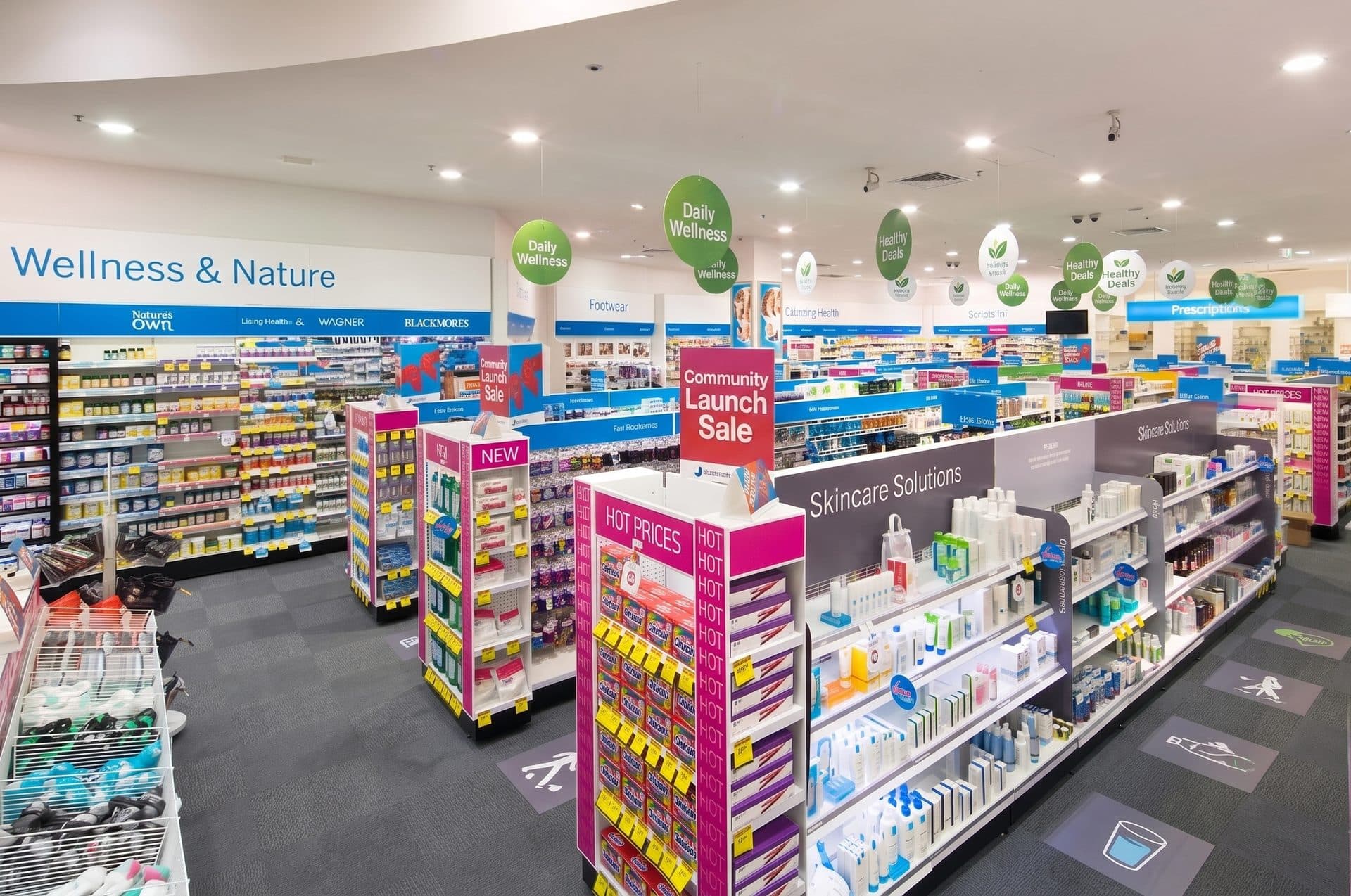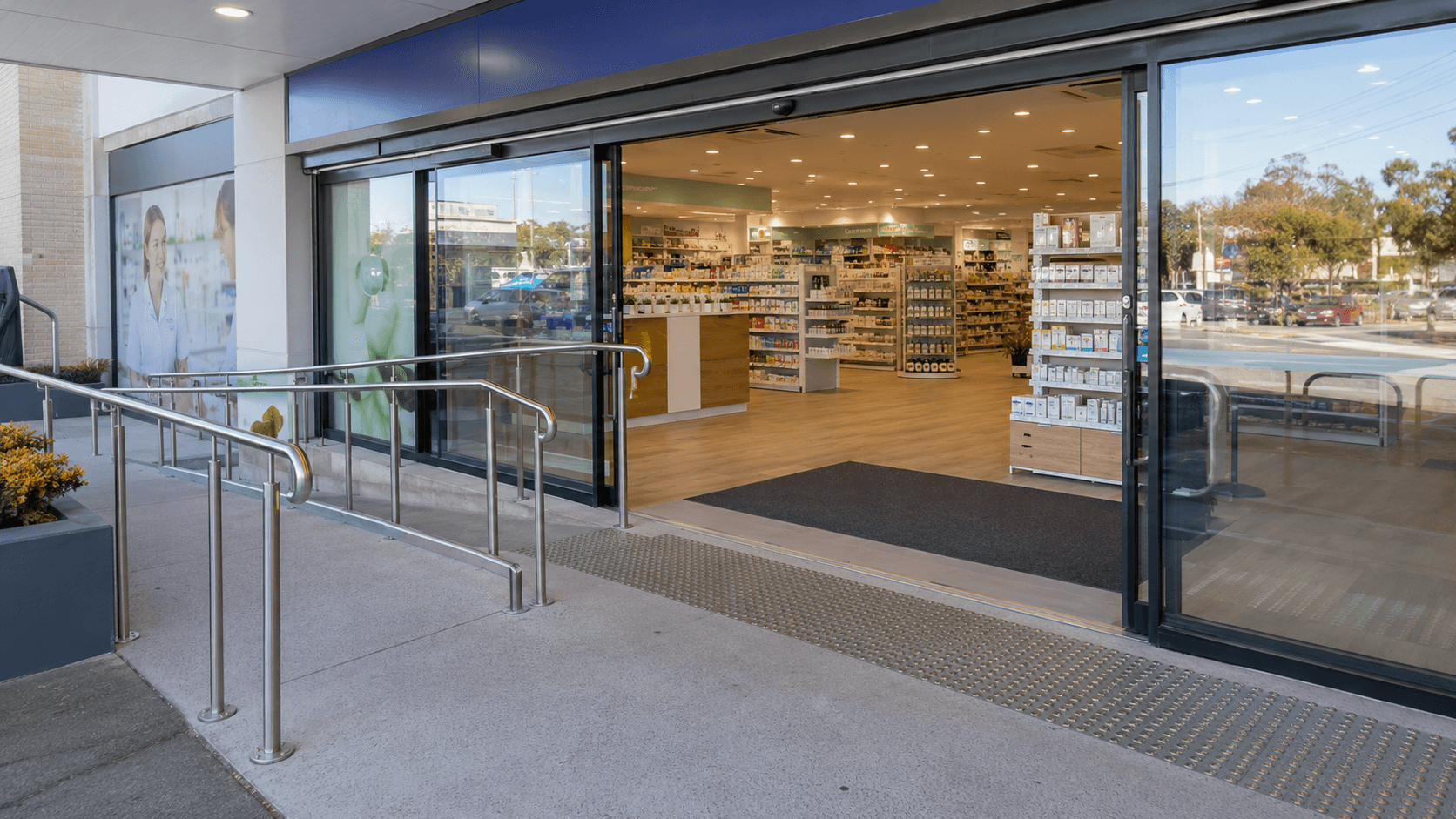
Most Australians walk into the pharmacy closest to home, out of habit rather than choice. For a one-off over-the-counter (OTC) purchase, that works. For a repeat prescription, a Webster pack, a vaccination, a late-night run when you have run out, or a pickup for someone you care for, the closest counter is not always the right one, and picking wrong costs you a second trip or extra money.
General information, not medical advice
This guide explains how things work in general. It cannot tell you what is right for you, so check anything that affects you with your pharmacist or GP.
Always read the label and follow the directions for use.
Based on official Australian government and health sources. Rules can change.
Australia has more than 6,000 community pharmacies, and the Pharmacy Guild of Australia reports that 96% of people in capital cities, and 74% of people elsewhere, live within 2.5 kilometres of one (Vital facts on community pharmacy, Pharmacy Guild of Australia). They are not interchangeable. Hours, services, spoken languages, accessibility, delivery zones, compounding capability, and what a pharmacist can treat without a doctor all vary. This guide walks through how to pick the right one for what you actually need.
What makes one pharmacy the right one
The right pharmacy is the one that handles what you actually care about, and a handful of differences decide that. Hours come first, and there is no national standard for them. A typical suburban pharmacy keeps daytime hours on weekdays and shorter hours on Sundays, late-trading sites run well into the evening in inner suburbs, and genuine 24-hour pharmacies sit mostly in the biggest cities. If you need a medicine overnight or on a public holiday, hours are your first filter.
After hours comes the service. Beyond dispensing, many pharmacies offer vaccinations, a medicines check (MedsCheck), a Home Medicines Review (HMR), Webster packs, opioid dependence treatment, sleep apnoea trials, quit-smoking support, and blood pressure checks, but few offer every one of these. What a pharmacist can treat also depends on where you live. Healthdirect notes some community pharmacists can now treat an uncomplicated urinary tract infection (UTI) and resupply hormonal contraception, and that what is on offer depends on the state and the individual pharmacy (Getting the most out of your pharmacist, Healthdirect). Because the list of conditions and the participating pharmacies differ by state, your state or territory health department holds the current detail.
The rest are matters of fit. Many pharmacies deliver, some on the same day, though cold-chain medicines like insulin need a temperature-controlled courier and regional coverage stays patchy. A pharmacist who speaks your first language makes the medicines conversation safer. Accessibility features, including step-free entry, accessible parking and a private consultation room, vary widely. Compounding, meaning made-to-order preparations for allergies, children, or discontinued strengths, is offered by a small minority who tend to advertise it. More than 95% of community pharmacies are accredited under the Quality Care Pharmacy Program (QCPP), a voluntary quality assurance program (What is QCPP?, Quality Care Pharmacy Program). In the Pharmacy Finder directory, you can filter by opening hours, services (including delivery and compounding) and wheelchair access, and a phone call is the surest way to check which languages staff speak.

Hours, spoken languages, accessibility, delivery zones, and what a pharmacist can treat all shift from one counter to the next, which is why the pharmacy that suits your neighbour may not suit you. Source: pharmacy numbers from the Pharmacy Guild of Australia.
How to find the right pharmacy
Finding the right pharmacy takes four steps, and the first one happens before you open the directory. Work out what you need, then let the filters do the narrowing.
Match your need to the right filter
If you already know the one factor that matters most, you can go straight to it. The table below maps the common needs to where each is handled, and links the guide that goes deeper on each one.
| What you need | Where to find it |
|---|---|
| A pharmacy open right now | The open-now filter on Pharmacy Finder, then the 24-hour pharmacy guide for overnight |
| Late trading in your state | Late-night pharmacy by state |
| Cover over a public holiday | Pharmacy public holiday hours |
| Medicines brought to your door | Pharmacy delivery in Australia |
| Step-free access and accessible parking | Disability-accessible pharmacies |
| A pharmacist who speaks your language | Multilingual pharmacies |
| Weekly dose packs for regular medicines | Webster packs and dose administration aids |
| To understand what a community pharmacy does | Community pharmacy in Australia |
General information drawn from publicly available sources, which can change. Check anything that affects your situation with your pharmacist.
When standard hours are not enough
For most prescriptions the suburban pharmacy is fine, and only three situations push you past it. The first is an out-of-hours need: if you run low late on a Friday or before a long weekend, your options are a late-trading pharmacy, a rare 24-hour site, or, if you have no valid prescription left and cannot contact your prescriber, a one-off supply from a pharmacist under the Pharmaceutical Benefits Scheme (PBS) continued dispensing arrangement, available once in a 12-month period for an eligible medicine you have been supplied in the last three months. The second is a public holiday, when many pharmacies close or cut their hours on the major days, so it is worth filling ahead by a day or two and checking our public holiday hours guide. The third is a same-day need with no way to travel, where some pharmacies offer same-day delivery for a fee that varies by pharmacy.
Healthdirect runs a free 24-hour helpline on 1800 022 222 staffed by registered nurses, and 13 SICK (13 74 25) offers after-hours doctor appointments by telehealth, and home visits in the areas it covers. For a medicine taken the wrong way, call the Poisons Information Centre on 13 11 26. For anything life-threatening, call 000 or go to the nearest emergency department.
The right pharmacy for a long-term condition
If you fill the same prescription month after month, treat your pharmacy as a partner rather than a shopfront. The ones that serve regular patients best can dispense from your Active Script List, a list of your electronic prescriptions (eScripts, sent to your phone as a QR code, or token). You set up the list once at a pharmacy with identification, new eScripts are added to it automatically, and you can ask each pharmacy you use to access it, which saves forwarding a token for every fill (Electronic prescriptions, Australian Digital Health Agency). They record your medicines for the PBS Safety Net and flag when you are close to the threshold, stock your specific medicine consistently rather than rotating generics, and put the same pharmacist in front of you often enough that they know your history. Home delivery helps if mobility or work hours make the trip hard. Moving to a pharmacy like that is quick: forward your next eScript token, or ask the new pharmacy to transfer your remaining repeats.
The PBS Safety Net counts what your family spends across a calendar year, and that spending is recorded on a Safety Net prescription record form (PB240) or a pharmacy printout that you are responsible for keeping, rather than being held by one pharmacy (Safety Net explanatory notes, PBS). Moving your scripts to a new counter keeps the spending you have already built, as long as you ask each pharmacy to record your medicines and you keep those records together. Our PBS concession and Safety Net guide explains the paperwork.
The right pharmacy for someone you care for
When you collect medicines for an older parent or someone with a disability, carer pickup, home delivery and dose packs make the real difference. Look for a pharmacy that provides Webster packs, or another dose administration aid (DAA), and that will deliver those packs to the door, which counts most in regional areas. A pharmacy that recognises authorised carers lets a nominated person collect medicines without you needing to be there every time, and a private consultation room helps for any conversation that needs one.
For someone who cannot easily get out, a pharmacy that delivers and prepares weekly dose packs saves the trip entirely. Many will bring the packs to the door, which matters most where the nearest counter is a drive away.

Which pharmacies give vaccinations
Many Australian pharmacies vaccinate, but the scope narrows as the patient gets younger or the trip gets more specialised. The standard adult influenza shot is widely available. Children's influenza vaccination depends on the state and the pharmacist's training: in New South Wales, pharmacist immunisers can give the influenza vaccine, including a nasal spray option, from age 2 (Vaccine eligibility table for community pharmacies, NSW Health), while Healthdirect notes that who can be vaccinated at a pharmacy varies from state to state (Getting the most out of your pharmacist, Healthdirect). Many pharmacies handle common travel vaccinations, and refer you to a specialist travel clinic for the few that need one. Covid boosters and whooping cough vaccination in pregnancy are available at many pharmacies. Because the age rules for children shift between states, it is worth a quick call before you book.
Where to find sensitive services
Some services are offered quietly rather than advertised, and knowing they exist is half the search. Naloxone, a medicine that reverses the effects of an opioid, is supplied free and without a prescription through the federal Take Home Naloxone Program to people at risk of, or likely to witness, an opioid emergency, at participating pharmacies across Australia (Where to access naloxone, Department of Health, Disability and Ageing). A pharmacy outside the program may sell naloxone over the counter for a fee, so it is worth asking whether yours takes part. Opioid dependence treatment runs through an arrangement between your prescriber and a participating pharmacy, and not every pharmacy takes part. Emergency contraception is widely available from Australian pharmacies, and Healthdirect notes a pharmacist can provide it without a prescription and explain how to use it (Getting the most out of your pharmacist, Healthdirect).
How to spot a safe online pharmacy
Online pharmacies are now mainstream, and a legitimate one works under the same rules as a shopfront: run by pharmacists registered with the Australian Health Practitioner Regulation Agency (AHPRA), and dispensing prescription-only medicines only against a valid prescription. A five-second test, drawing on Healthdirect's advice on buying medicines online, separates the real ones from the rest.
- Registered pharmacist. Confirm the pharmacist in charge on the AHPRA register at ahpra.gov.au.
- Australian address. A real physical premises in Australia, not just a website.
- Prescription required. A valid Australian script for any prescription-only medicine.
- Pharmacist reachable. Someone you can speak to for advice, not only a checkout.
- Contact details on show. An email address, a working phone number and company details, for example an Australian Company Number (ACN).
If any of the five is missing, look elsewhere.
The difference between a pharmacist and a chemist
A pharmacist is the person, registered with AHPRA. A chemist is what most Australians call the place. In everyday speech both point at the same premises, and the full explainer, including why the two words still get mixed up, is in our pharmacist versus chemist guide.
When a pharmacy is not the answer
A pharmacy is the right first stop for a great deal, but not for everything. It cannot diagnose most clinical conditions, and it cannot prescribe prescription-only medicines outside the state programs described above, so both point you to a general practitioner (GP). It cannot dispense a prescription from a prescriber who is not registered in Australia. NSW Health, for example, advises pharmacists that they can only supply prescription medicines on a prescription from a practitioner registered with AHPRA (Pharmacists frequently asked questions, NSW Health), so a local doctor would need to write you a fresh script. And it cannot provide emergency clinical care. If you are unsure where to turn, Healthdirect on 1800 022 222 is a sound 24-hour first call, and for a medicine taken the wrong way, Poisons Information on 13 11 26.
Talk to someone now
Free advice for questions about a medicine, dose, or interaction.
Frequently asked questions
Start with the open-now filter on Pharmacy Finder, which reads each pharmacy's listed opening hours. Past about 10pm in most cities the late-trading sites are your realistic option, and after midnight only a small number of genuine 24-hour pharmacies in the largest cities stay open, so it is worth phoning ahead before you drive over.
Every Australian pharmacy has to operate under a registered pharmacist, and you can look that person up on the AHPRA register. The Pharmacy Board of Australia notes that pharmacy premises are approved and regulated by the pharmacy approval authority in each state and territory (Other regulators, Pharmacy Board of Australia). If you cannot confirm the pharmacist's registration, that is a reason to choose a different pharmacy.
Yes. Because an eScript token travels with you, you can present it at any pharmacy that suits you that week, and your remaining repeats can move with it. People on several regular medicines often prefer to settle at one pharmacy so their record and Safety Net tally stay in one place, but nothing ties you to a single counter.
Having a medicine delivered does not usually change the price of the medicine itself. What you may pay on top is a delivery fee that each pharmacy sets for itself, and heat-sensitive medicines can carry a higher charge because they travel in a chilled courier bag. Some pharmacies waive the fee for regular patients or for orders over a set value, so it is worth asking what your usual one does.
In most parts of Australia, yes, though it is narrower than it sounds. Healthdirect notes that a pharmacist can treat an uncomplicated UTI for people aged 18 to 65 who are not pregnant, and that some states are still trialling the service (Getting the most out of your pharmacist, Healthdirect). Each state sets its own rules. In NSW, for example, the service is for females aged 18 to 65 (Expanded scope services, NSW Health), and children, men and pregnant patients are referred to a doctor. The quickest way to know is to ring a pharmacy near you and ask whether they run the state service and whether you would qualify.
Holiday trading hours are set by each pharmacy, not fixed nationally, so two pharmacies on the same street can differ. The open-now filter is the fastest way to see who is trading that day, and the larger sites in the capital cities are the most likely to keep long hours. If you have no valid prescription left for a regular medicine and cannot contact your prescriber, a pharmacist may be able to supply it once under the continued dispensing arrangement described above. Find a pharmacy near you: browse Australian pharmacies, or go straight to vaccinations, compounding, Webster packs or delivery.