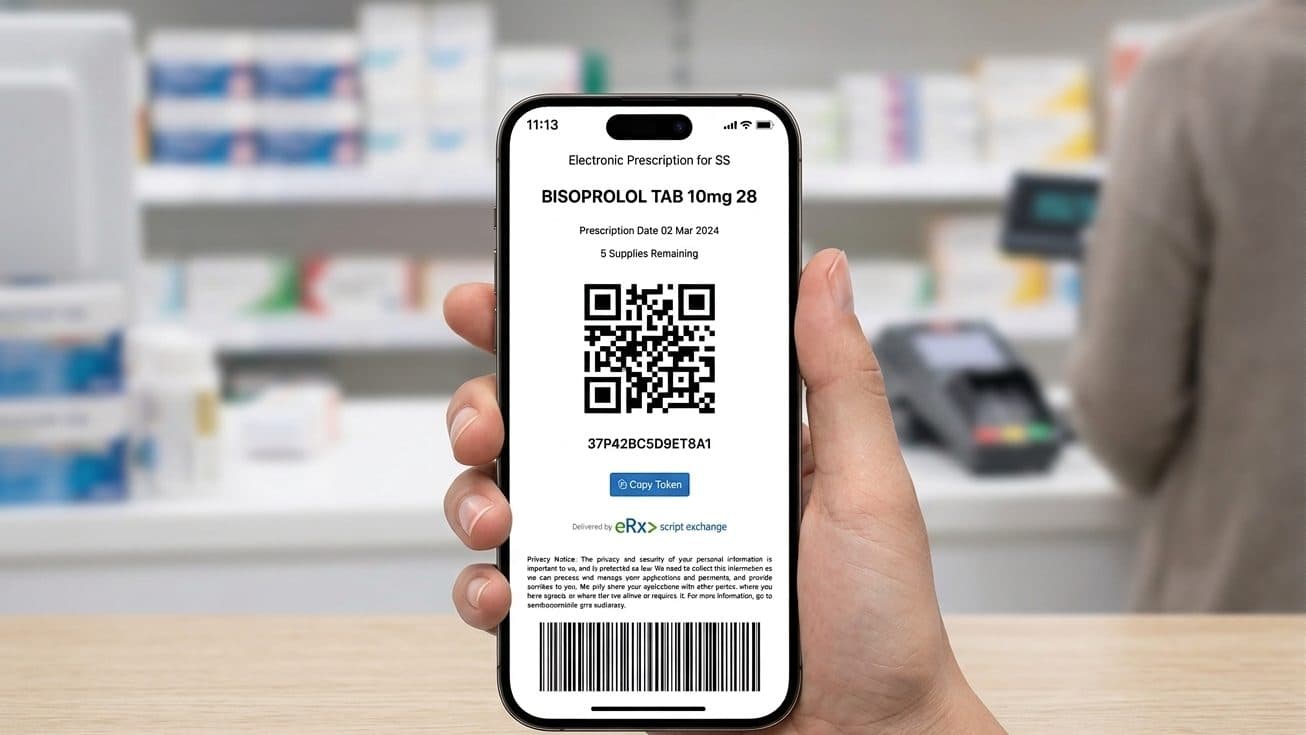
A Pharmaceutical Benefits Scheme (PBS) prescription is subsidised by the Australian Government. A private prescription is not. That distinction can change the amount you pay even when the medicine itself is the same.
General information, not medical advice
This guide explains how things work in general. It cannot tell you what is right for you, so check anything that affects you with your pharmacist or GP.
Always read the label and follow the directions for use.
Based on official Australian government and health sources. Rules can change.
For a PBS-listed medicine, the 2026 co-payment is capped at $25.00 for a general patient or $7.70 for a concession cardholder (PBS fees and patient contributions). A private prescription has no PBS cap, so the price depends on the medicine, the pack and the pharmacy. This guide explains how to tell which type of script you have and when a prescriber may be able to issue it under the PBS instead.
If your question is why one script cost you $12 and another cost $80, the answer is almost always this split. For wider background on how scripts work, see our prescriptions in Australia guide.
PBS prescription vs private prescription
The two scripts really differ on one thing: whether the government subsidises the medicine. That single difference decides what you pay, who sets the price, and whether the cost counts towards your Safety Net.
| Feature | PBS prescription | Private prescription |
|---|---|---|
| Government subsidy | ✓ Covers most of the cost | - No subsidy |
| What you pay | Up to $25.00 general or $7.70 concession, from 1st January 2026 | The pharmacy's full price, which varies |
| Who sets the price | Set federally under the PBS | The pharmacy sets it |
| Counts towards the PBS Safety Net | ✓ Counts | - Does not count |
| When it applies | Your medicine and condition fit the PBS listing | Not PBS-listed for you, or the prescriber writes it privately |
contribution figures current as at 1st January 2026, from the PBS fees and patient contributions notes.
What a PBS prescription covers
On a PBS script your medicine is listed on the Pharmaceutical Benefits Schedule and the government subsidises it. You pay the standard contribution and the PBS covers the rest, whether the medicine costs the system $40 or several thousand dollars. The PBS publishes worked examples of this, including medicines where the government subsidy runs to hundreds or thousands of dollars while the patient still pays the standard amount, in its fees and patient contributions notes.
The contribution is a ceiling, not a flat fee. The PBS fees notes describe general and concession patients alike as paying up to the co-payment rather than a set amount, which matters for cheaper medicines, as the next section explains. Concession pricing applies to holders of an eligible concession card and to Department of Veterans' Affairs (DVA) Gold and Orange Card holders. A DVA White Card holder gets concession pricing only for Repatriation Pharmaceutical Benefits Scheme (RPBS) prescriptions, unless they also hold a Centrelink concession card, according to the PBS explanatory notes.
Most medicines for an ongoing condition are on the PBS, including treatments for blood pressure, cholesterol, type 2 diabetes, asthma, thyroid conditions and many common mental health conditions. The list is broad and is updated each month, which is why a medicine that was not covered last year can appear on it this year.
What a private prescription is
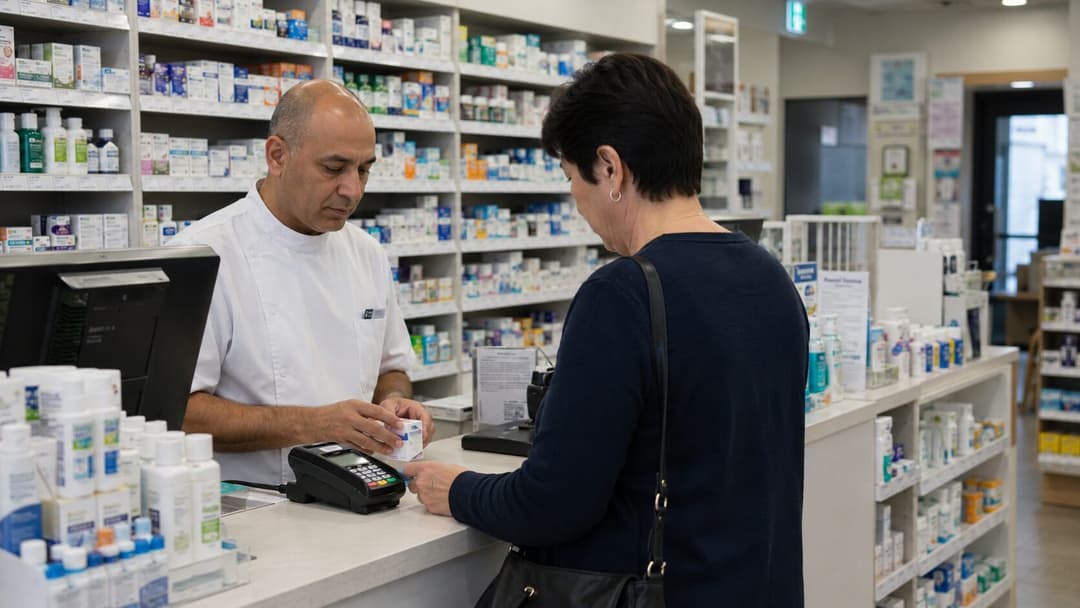
A private prescription is a valid, legal script for a medicine the PBS is not subsidising for you. You still need the prescription to get the medicine, and the pharmacist dispenses it the same way as any other script. The difference is the price: with no subsidy you pay the pharmacy's full charge, and that charge is set by the pharmacy, so it can differ from one to the next.
Because that price is not fixed, comparing a couple of pharmacies can save money before you fill an expensive private script.
Why a cheap medicine can cost less on a private script
This part surprises people. Because the PBS contribution is a ceiling, general patients pay up to the co-payment rather than a flat fee, so when a PBS medicine's dispensed price is below $25.00 a general patient can pay less than the full co-payment. The PBS fees notes let the pharmacy add small extra charges to the dispensed price, including an optional charge of up to $2.79 (the 2026 amount, which the PBS says is indexed from 1st January each year), as long as the total does not exceed $25.00. Many common medicines sit under the general co-payment.
That has a real effect. For an inexpensive medicine the PBS subsidy adds little, and a pharmacy's discounted private price can sometimes be lower than the PBS price, so paying privately can cost less for that fill. The catch is that a private payment does not count towards your PBS Safety Net, covered below, so the cheaper choice for one fill can be the more expensive choice across a year of repeats. For a side-by-side look at what the same medicine can cost, see our script cost comparison guide.
Because the PBS charge is a ceiling, a general patient pays up to $25.00 rather than a flat fee, so a discounted private price can undercut a cheap PBS medicine on a single fill. A private payment builds nothing towards your Safety Net, so across a year of repeats the PBS script is usually cheaper overall.
Why your script might be private even for a PBS medicine
Even when a medicine is on the PBS, your particular script can be written private. Under how the PBS lists and subsidises medicines, the common reasons are that the medicine is not PBS-listed at all, including some newer medicines, some travel or lifestyle medicines, and many compounded preparations; that it is listed but only for specific conditions, and yours is not one of them; that it needs an Authority approval the prescriber has not yet obtained; that the quantity is above the PBS limit for that item; or that you are not eligible for the PBS, for example as an overseas visitor from a country without a Reciprocal Health Care Agreement with Australia. According to the PBS frequently asked questions, visitors from agreement countries, including the United Kingdom and New Zealand, can claim PBS benefits by showing their passport when they lodge a prescription.
Choosing a more expensive brand of a PBS medicine does not make the script private. It stays a PBS script, and you pay the standard contribution plus a brand premium, explained next.
Brand premiums and therapeutic group premiums
The PBS subsidises up to the price of the lowest-priced brand of a medicine. If you choose a more expensive brand, you pay the difference as a brand premium on top of your contribution, and the PBS states that this extra amount does not count towards your Safety Net threshold, in its brand premium policy. A therapeutic group premium works the same way across a group of similar medicines. Your pharmacist can usually offer an equivalent brand that carries no premium.
How the Safety Net treats each script
The PBS Safety Net lowers your costs once your PBS contributions for the calendar year reach a threshold. From 1st January 2026 the thresholds are $1,748.20 for general patients and $277.20 for concession cardholders, per the PBS fees notes. After you reach it, general patients pay the concession rate and concession cardholders pay no co-payment for the rest of that calendar year, although any brand or therapeutic group premium still applies, according to the PBS Safety Net notes.
Private prescriptions do not count towards the threshold, and neither does any brand premium you pay. Only your PBS contributions build your Safety Net, so if you have high medicine costs, your PBS items are the ones that count towards it. Our PBS concession and Safety Net guide covers how the tally is tracked.
When a private script can become a PBS script
If a medicine is PBS-listed and your situation fits the listed use, you can ask your prescriber to write the next script as PBS. This has to come from the prescriber: a pharmacist dispenses the script as written and cannot switch it to PBS, so the change needs a fresh prescription. A switch can work if the medicine, or your condition, moved onto the PBS list since your last script; if you now qualify for an Authority code the prescriber can apply for; or if you have met an eligibility step the listing requires, for example after an earlier treatment. It will not work if the medicine is not PBS-listed at all, or if the listing covers a different condition, dose or patient group than yours.
You cannot split one script across PBS and private supply, so if the switch works the prescriber issues a new PBS script and the private one is set aside. Our guide to the PBS explains what listing means in more detail.
Authority scripts, in brief
Some PBS medicines need the prescriber to get an Authority before the pharmacy can dispense at the PBS price. A Streamlined Authority is a code the prescriber enters in their software, with no phone call. A phone or written Authority means the prescriber contacts Services Australia for an approval number. If the Authority is missed, the pharmacy cannot dispense at the PBS price and will offer the private price or hold the script while the prescriber corrects it. Authority does not apply to routine PBS medicines. It is attached to particular listings where the PBS confirms eligibility one patient at a time.
Talk to someone now
Free advice for questions about a medicine, dose, or interaction.
Frequently asked questions
There is no single figure. Private pricing depends on the medicine and on each pharmacy's own charge, so the same script can cost different amounts at two shops on the same street. Everyday medicines are often modest, while newer specialty and compounded medicines can reach several hundred dollars a fill.
Not automatically. The quickest way to know for a specific medicine is to have your pharmacist compare its PBS price against the discounted private price, since for medicines below the general co-payment the private figure sometimes wins on a single fill (PBS fees and patient contributions notes).
The person who can review this is your prescriber, not the pharmacy. Common causes are a PBS listing that only covers conditions other than yours, or an Authority step that was skipped when the script was created, and either can be reissued under the PBS once eligibility is confirmed (About the PBS, Pharmaceutical Benefits Scheme).
No, dispensing has to match the prescription. What a pharmacist can do is contact your prescriber to flag that you may be eligible, but the new PBS script, and any Authority the listing requires, still come from the prescriber.
That depends entirely on your insurer and policy. Some extras policies offer partial cover for non-PBS medicines, often with a per-item limit and a yearly cap, while hospital cover generally does not extend to outpatient prescriptions, so your policy's product disclosure statement is where the answer sits.
No. The supply is still made under the PBS, and the premium is only the gap between the brand you chose and the lowest-priced brand. That gap is the single part that sits outside the subsidy, and unlike your contribution it does not build your Safety Net (Brand premium policy, Pharmaceutical Benefits Scheme). Find a pharmacy near you: browse Australian pharmacies.