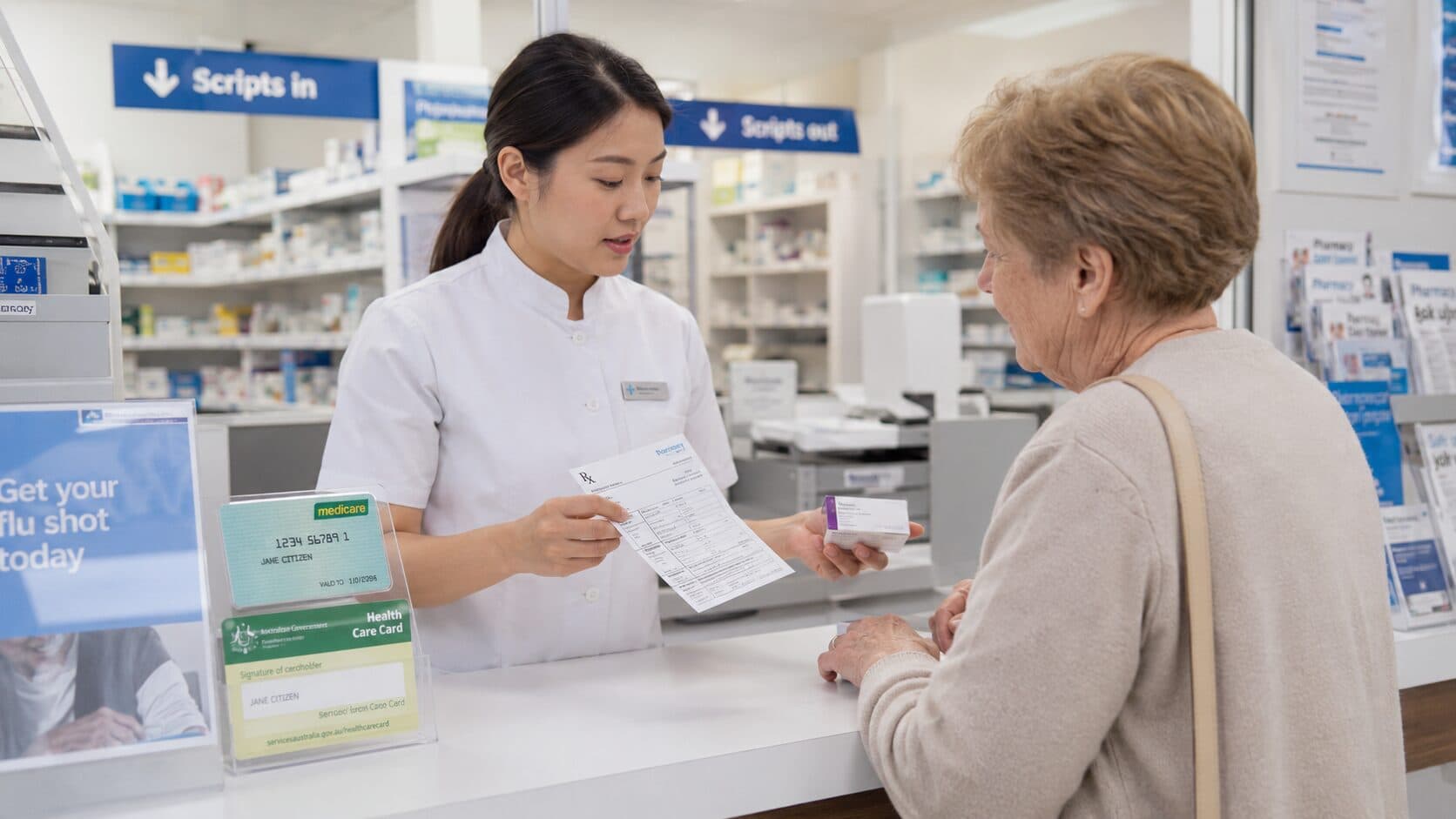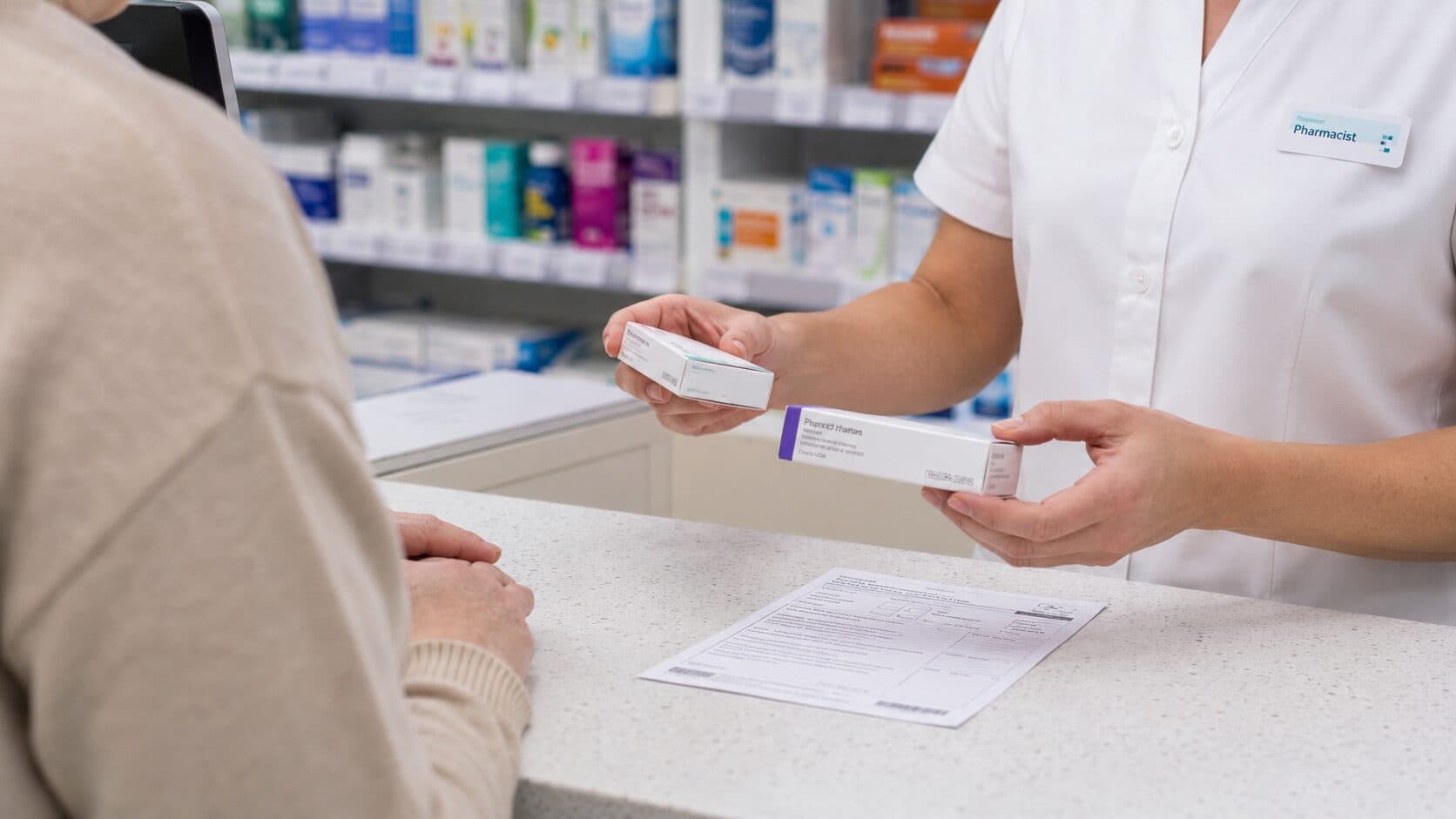
The same prescription can cost different amounts at two pharmacies on the same street, and the difference comes down to a handful of factors. Part of the price is fixed by the federal government, and part of it is left to the pharmacy.
General information, not medical advice
This guide explains how things work in general. It cannot tell you what is right for you, so check anything that affects you with your pharmacist or GP.
Always read the label and follow the directions for use.
Based on official Australian government and health sources. Rules can change.
For a medicine listed on the Pharmaceutical Benefits Scheme, or PBS, the government sets the most you can be charged. From 1st January 2026 that maximum is $25.00 for a general patient (someone without a concession card) and $7.70 for someone with a concession card, according to the Department of Health, Disability and Ageing. The name for that amount is the co-payment.
The point people miss is that the co-payment is a ceiling, not a set price. A pharmacy can charge less, and several situations bring the real price below it. When two pharmacies quote you different amounts, the gap almost always comes from one of four places: a medicine that already costs less than the co-payment, a brand premium, a private prescription that is not on the PBS, or an optional discount the pharmacy chose to apply.
The PBS co-payment is a maximum, not a fixed price
For a PBS medicine, the Australian Government subsidises the cost and you pay the rest up to the co-payment. The Pharmaceutical Benefits Scheme confirms that from 1st January 2026 a general patient pays up to $25.00 and a concession card holder pays up to $7.70, with the government covering the remaining cost of the medicine, aside from brand premiums and a few other allowable charges.
Because it is a maximum, the co-payment is the same nationally, but the amount you actually hand over is not always the full figure. Two pharmacies can both be following the rules and still charge different totals for the same script.
Source: 2026 figures from current patient fees and charges, PBS.
Why the same PBS script can still cost less
The most common reason is a medicine that already sits below the co-payment. Many older, off-patent medicines have a dispensed price under $25.00, so you usually pay that lower price rather than the full amount. The PBS allows the pharmacy to add a charge of up to $2.79 for a general patient, as long as the total does not go above $25.00. This figure is set by the government and usually changes on 1st January. The Department of Health notes that when a medicine costs less than the full co-payment, it is subject to normal retail pricing, which can vary depending on where you fill it. The differences here are usually small, because each pharmacy's wholesale cost and dispensing margin only move the price a little.
The second reason is an optional discount. Pharmacists have long been able to take a small amount off the co-payment, but that discount is being reduced. The Pharmaceutical Benefits Scheme explains that for general patients the optional discount was reduced to nil from 1st January 2026, so it no longer comes off a general script. For concession card holders it reduces a little each year until it reaches zero in 2030, with up to 60 cents off the $7.70 co-payment through 2026. Whether a pharmacy applies it at all is its own choice, so a concession script might cost about $7.10 at one pharmacy and $7.70 at another. Pharmacists can also choose to give a general patient a separate discount on some medicines with a PBS price between $25.00 and $51.10, so the price of those medicines can vary between pharmacies too.
One detail surprises people near the end of the year. Only the amount you actually pay counts toward your PBS Safety Net, and the Pharmaceutical Benefits Scheme confirms that once you reach the threshold, further PBS medicines are charged at the concession rate for general patients or dispensed at no further charge for concession card holders for the rest of the calendar year. A discounted script therefore moves you toward that threshold slightly more slowly, so if you are close to it, paying the full co-payment can get you there sooner. Any brand or therapeutic group premium still applies after the threshold, according to the PBS Safety Net notes.
A pharmacy can charge less than the $25.00 general or $7.70 concession maximum, so a script that already costs under the cap can total less at a different counter.
Brand premiums add a cost the government does not cover
A brand premium is an extra amount charged by the maker of a particular brand, on top of the standard price. The Department of Health advises that if you choose a medicine with a brand premium, you pay that premium on top of the co-payment, and the premium does not count toward your PBS Safety Net. Choosing an equivalent generic version, which works the same way and is usually cheaper, avoids the premium.
This is where two pharmacies can legitimately differ on what looks like the same medicine. If one dispenses the premium brand and the other a generic, the prices will not match, even though the PBS listing behind them is the same.
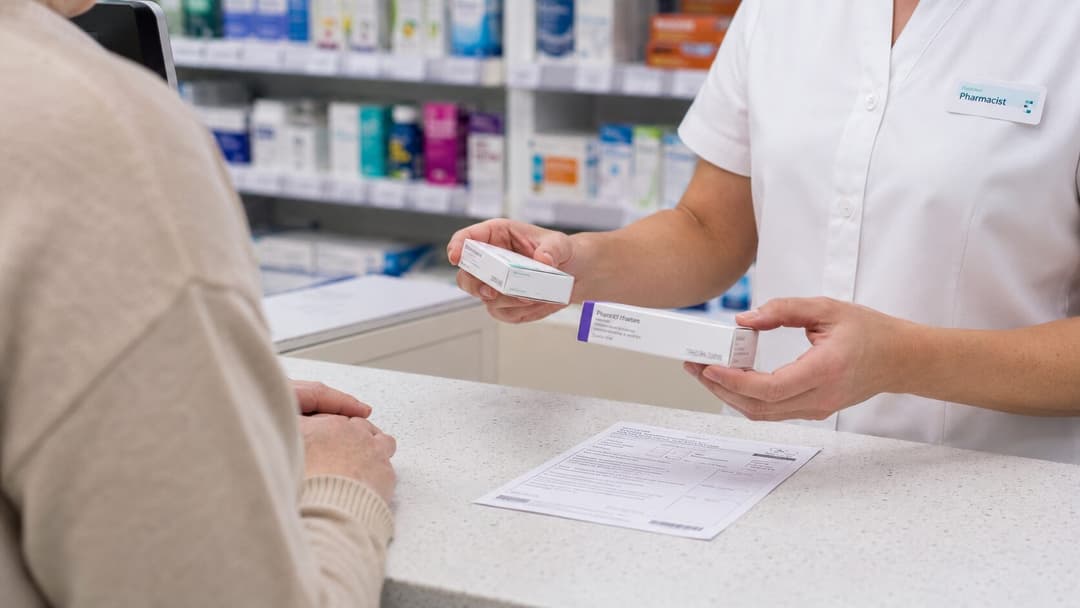
Ask whether an equivalent generic is available. It works the same way, is usually cheaper, and often removes the extra brand cost at the same counter.
Private prescriptions are not capped
A private, or non-PBS, prescription sits outside the co-payment system, so no federal maximum applies. The pharmacy sets the price from the wholesale cost of the medicine, the dispensing work involved and its own margin, which is why two pharmacies can quote noticeably different amounts for the same private script. Our guide on private versus PBS prescriptions explains when a script is written privately and why.
A prescription is usually private when the medicine is not listed on the PBS, when it is listed only for specific conditions that do not apply to you, or when the prescriber writes it privately for an administrative reason. Because private prices are uncapped, a comparison between pharmacies can make a real difference here. A price comparison only holds when it is the same brand and the same pack size, because a 30-tablet pack and a 60-tablet pack are not the same purchase. If you decide to fill it somewhere else, our guide to prescriptions in Australia covers how to move a script between pharmacies.
What is capped and what is not
The split between the two is easiest to see side by side.
| PBS prescription | Private (non-PBS) prescription | |
|---|---|---|
| Federal price cap | Yes: $25.00 general, $7.70 concession in 2026 | No cap |
| Who sets the price | The government sets the maximum | The pharmacy, from cost and margin |
| Variation between pharmacies | Small, and only below the maximum | Can be large for the same medicine |
| Counts toward the PBS Safety Net | Yes | No |
PBS and private prescription rules from PBS co-payments, Department of Health, Disability and Ageing. The co-payment is a ceiling; pharmacies can discount below it.
When comparing pharmacies is worth it
A few situations make the extra calls worth it, and the Department of Health itself suggests speaking with your pharmacist about the cost and comparing prices, including online. Private prescriptions are the clearest case: prices are uncapped and can differ by a lot, so a call to two or three pharmacies before you fill can save real money. Medicines that already sit below the co-payment vary only a little per script, so the saving is minor on a single fill, though it accumulates over a year of regular repeats. Brand premiums are worth raising with your pharmacist, because an equivalent generic at the same counter often removes the extra cost. And a 60-day prescription, where your doctor decides it suits your condition, gives you twice the medicine for one co-payment, which lowers the cost per day.
Private prices are uncapped, so two or three quotes before you fill can turn up a real difference on the same brand and pack size.
When staying with one pharmacy is worth more
Spreading your scripts across pharmacies to chase small savings can cost you in less obvious ways. Safety Net tracking is simpler when one pharmacy holds your record, because splitting scripts means each holds only part of it, and confirming your Safety Net status can take longer. Medication review works better when one pharmacist sees all your medicines together and can flag interactions, duplicates or dose changes, which matters most if you take several regular medicines or have recently left hospital. Continuity of care from a pharmacy that knows your history means changes get noticed faster than at a counter seeing you for the first time. And dose administration aids, like a weekly blister pack, are disruptive to move mid-cycle, because the new pharmacy needs your full list and time to set it up.
For a one-off private script, comparing prices is straightforward and can save real money. For your regular medicines, the cost of fragmenting your dispensing history is often higher than the dollar saved.
Talk to someone now
Free advice for questions about a medicine, dose, or interaction.
Frequently asked questions
Only up to a point. The maximum is set nationally, at $25.00 for general patients and $7.70 with a concession card in 2026, although a brand premium, a therapeutic group premium or a special patient contribution can be added on top for some medicines. Below the maximum, the price can differ if the medicine already costs less than the co-payment, if a pharmacy applies an optional discount, or if you are given a brand with a premium.
That is the optional discount some pharmacies still apply to concession scripts, worth up to 60 cents off in 2026. It is being phased out and reaches zero in 2030. General patients no longer receive this discount, although a pharmacist can choose to give a general patient a separate discount on some medicines with a PBS price between $25.00 and $51.10.
Yes, a little. The Safety Net tallies the actual dollars you hand over, not the maximum co-payment, so a few cents off each concession script means your yearly total climbs a touch more slowly. Across a year of regular repeats the effect is minor, but it is worth knowing if you count on reaching the Safety Net.
Because a private script sits outside the PBS, no maximum applies and the price is entirely up to the individual pharmacy. Two identical-looking private scripts can carry very different prices, so the surest way to compare is to ask each pharmacy for a quote, or check prices online, before you fill.
Yes. With an electronic script you forward the token to whichever pharmacy you choose, and a paper script can be handed to any pharmacy. Repeats can usually be moved between pharmacies on request, although some states have stricter rules for paper prescriptions for Schedule 8 (controlled) medicines, which our guide to transferring a prescription explains.
Usually. One co-payment covers a 60-day supply, rather than the two payments you would make for two separate 30-day scripts, so the cost per day falls where your doctor decides the longer supply suits your condition. The Department of Health estimates savings of up to $150.00 a year per medicine for general patients and $46.20 a year for concession card holders, though the saving is smaller if the medicine already costs less than the co-payment or carries a brand premium. Find a pharmacy near you: browse Australian pharmacies.