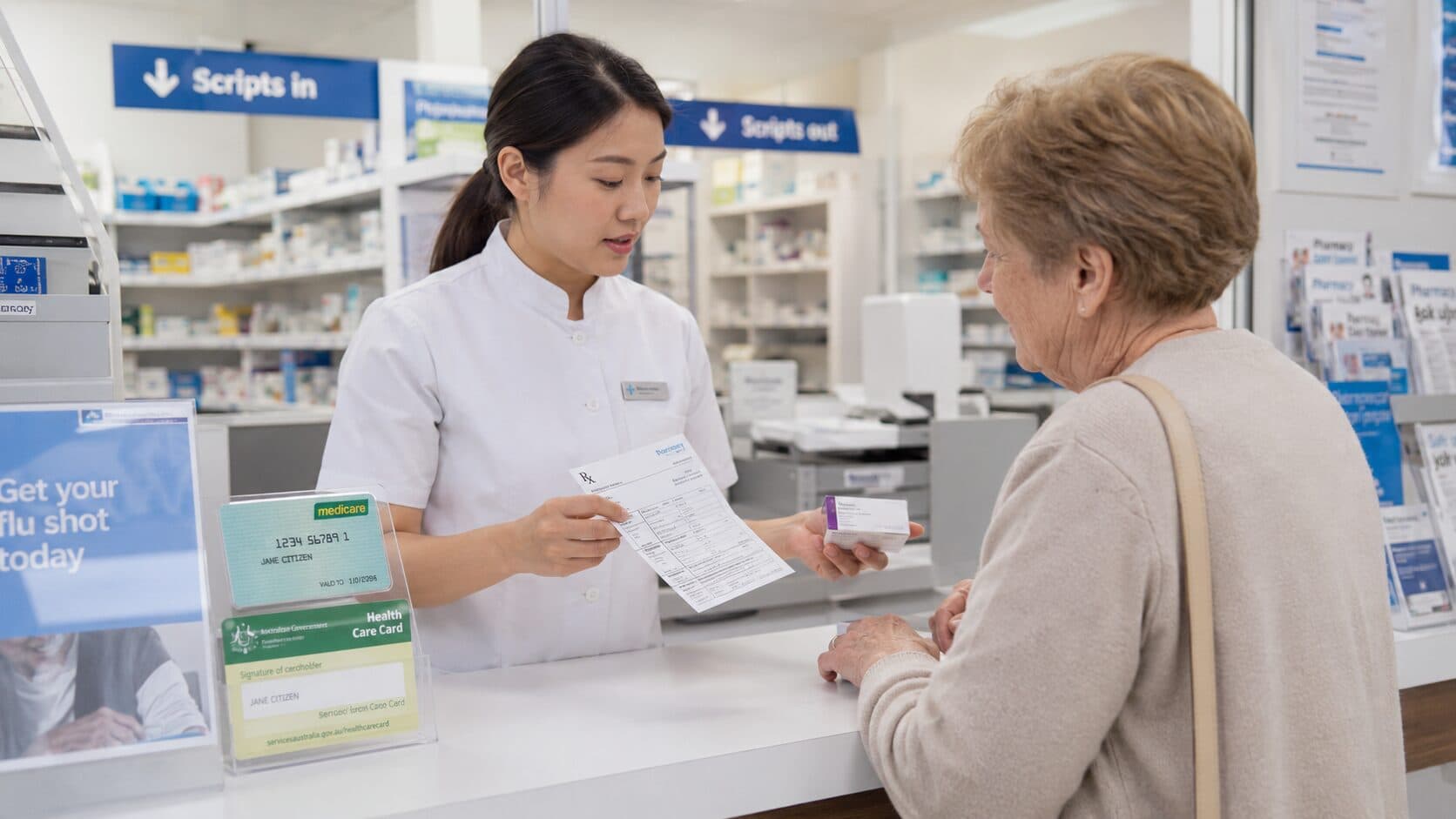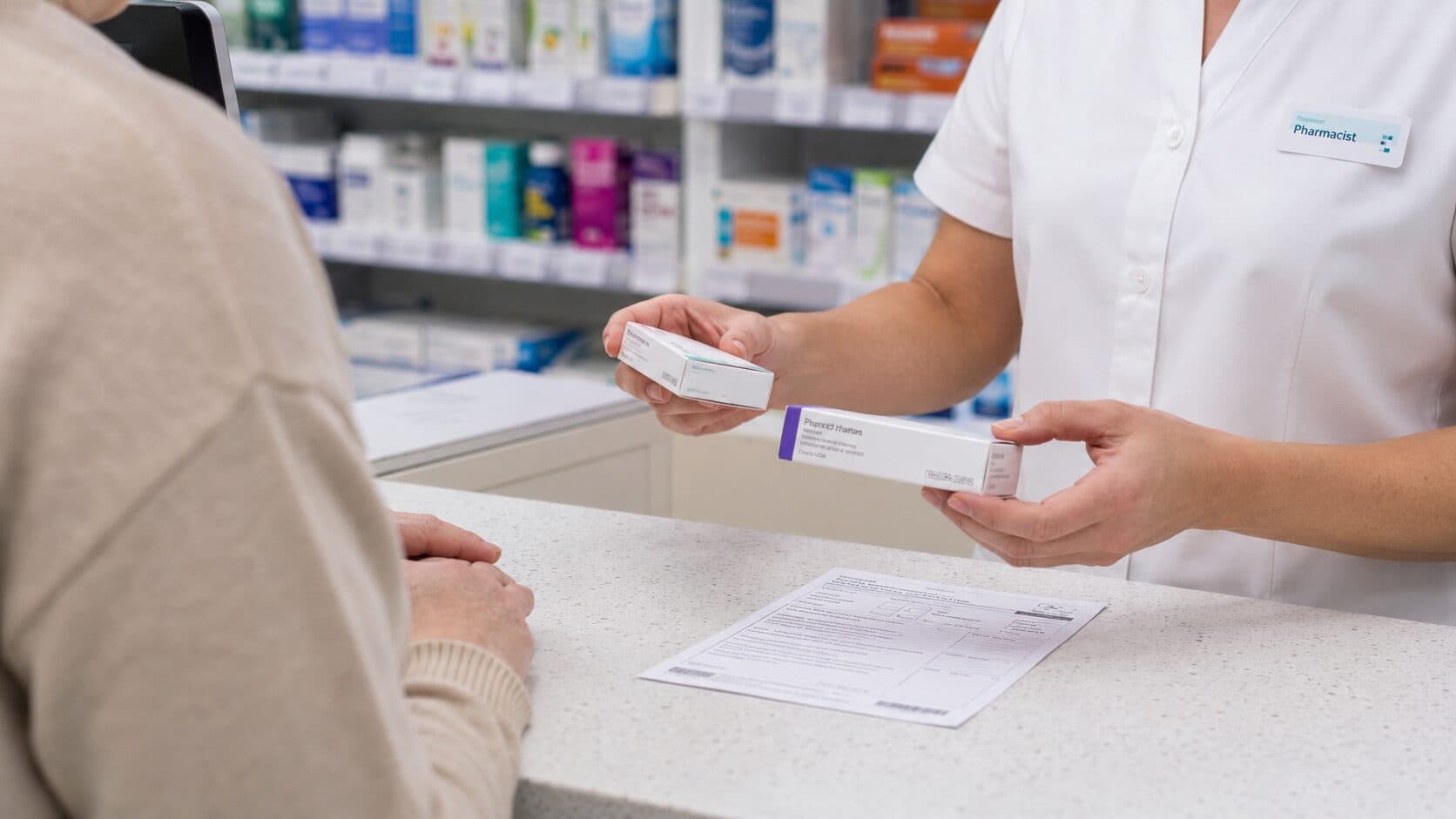
A generic medicine contains the same active ingredient at the same strength as the original brand, in a form the Therapeutic Goods Administration (TGA) has assessed as bioequivalent. The original brand is the version first registered, usually by the manufacturer that developed the medicine. Generics typically appear after the original patent expires, which is why they often cost less. If you choose to stay on the original brand when a cheaper version is on the shelf, you may pay a brand premium that the Pharmaceutical Benefits Scheme does not subsidise.
General information, not medical advice
This guide explains how things work in general. It cannot tell you what is right for you, so check anything that affects you with your pharmacist or GP.
Always read the label and follow the directions for use.
Based on official Australian government and health sources. Rules can change.
This guide explains the rules, not what to take. Substitution decisions belong with you, your prescriber, and your pharmacist.
Generic medicines defined
A generic prescription medicine is a version of an original brand medicine that becomes available once the patent on the original expires. It contains the same active ingredient, at the same dose, in the same dose form (tablet, capsule, cream, inhaler), released over a bioequivalent time window in the body.
The packaging, the tablet colour, the inactive ingredients (fillers, binders, dyes), and the brand name can all differ. The therapeutic substance and the dose do not.
| Factor | Original brand | ARTG-registered generic |
|---|---|---|
| Active ingredient | Same | Same |
| Strength and dose form | Same | Same |
| Inactive ingredients (fillers, dyes) | Original formulation | May differ |
| Packaging and tablet appearance | Original | May differ |
| TGA bioequivalence requirement | Reference product | 80 to 125% at 90% confidence |
| Applicable quality and safety requirements | Must be met | Must be met |
General information drawn from publicly available sources, which can change. Check anything that affects your situation with your pharmacist.
Generic does not mean lower quality. Every generic registered for supply in Australia must meet the same TGA quality, safety and efficacy requirements as the original brand, though the evidentiary pathway a generic sponsor follows to demonstrate this differs from the original brand's full registration pathway. Healthdirect confirms that these standards are checked by the TGA (What are generic medicines?, healthdirect).
TGA bioequivalence requirements
Before a generic can be supplied in Australia, the sponsor must demonstrate bioequivalence to the original brand. Bioequivalence is a statistical comparison of specific pharmacokinetic measures, principally peak concentration and total exposure, not a claim that a tablet contains 80 to 125 per cent of the labelled active ingredient. Under TGA guidelines, those measures must sit within 80 to 125 per cent of the original brand's own measures, with 90 per cent confidence.
The TGA publishes its approach to bioequivalence at tga.gov.au.
A small number of medicine classes are flagged for extra caution on substitution because the difference between an effective dose and a problematic dose is narrow. These are called narrow therapeutic index medicines. For those, your prescriber may mark the script "brand substitution not permitted", and the pharmacist will dispense the brand prescribed. PBS rules allow a prescriber to rule out substitution in this way (PBS brand premium and substitution rules), and your prescriber and pharmacist can tell you if a medicine you take falls into this category.
Why generics cost less
The original brand carries the cost of developing the medicine: the research, the clinical trials, the regulatory approvals, the marketing. While the patent is in force, the original manufacturer is the only legal supplier and can set a price that recovers those costs.
Once the patent expires, other manufacturers can apply for TGA approval to supply the same active ingredient. They did not pay for the original research, so they can sell at a lower price. With multiple suppliers competing, the price falls further.
The PBS uses this competition to drive the subsidised price down. Through price disclosure, PBS prices for medicines with several brands can be reduced twice a year (on 1 April and 1 October) based on the average prices at which those brands are actually supplied (Price disclosure, PBS). Over time, the PBS price can drop below the standard general co-payment of $25, at which point the medicine becomes a below co-payment medicine and you pay the actual price, although a pharmacy may add small allowable fees as long as the total stays at or below $25 (current patient fees and charges, PBS).
The brand premium (the un-subsidised gap)
When a generic is available at the lower PBS price and you choose to stay on the original brand, the difference between the two is called the brand premium. The PBS subsidises the cost up to the generic price. Anything above that, you pay out of pocket.
A few specifics:
- The brand premium can be anywhere from under a dollar to more than $30 per script, depending on the medicine and quantity (PBS brand premium list).
- The brand premium does not count toward your PBS Safety Net threshold. Once you cross the threshold, you still pay the brand premium, even when your co-payment is reduced or no longer charged.
- The brand premium reflects the higher price paid to the company that supplies that brand. Community pharmacies are required to charge it, so it is the same amount at any community pharmacy (PBS frequently asked questions).
If cost matters to you, ask the pharmacist what the brand premium is before they dispense. They can tell you the dollar figure and, at your request, dispense a lower-priced brand that the PBS lists as interchangeable, unless your prescriber has marked the script "brand substitution not permitted".
When you might still choose the brand
There are legitimate reasons to stay on the original brand. None of them are about quality. All of them are individual, and a pharmacist or prescriber is the right person to talk through which applies to you.
- Your prescriber has marked the script "brand substitution not permitted". This is a clinical decision and the pharmacist will follow it.
- You have a confirmed allergy or intolerance to an excipient in the generic. The active ingredient is the same; the inactive ingredients (lactose, gluten, certain dyes) can differ. If you react to a filler, that is a real medical reason to stay on a specific formulation.
- Continuity matters for a stable condition. If a chronic condition has been stable for years on one specific brand, your prescriber may decide that the predictability is worth the brand premium. That is a conversation between you, the prescriber, and the pharmacist.
- You find a particular dose form easier to use. Some patients find one tablet easier to swallow, one inhaler easier to actuate, or one packaging format easier to track. If that supports adherence, it matters.
Outside those reasons, brands that the PBS lists as interchangeable have been shown to be bioequivalent or therapeutically equivalent, so your pharmacist can substitute one for another at your request (PBS frequently asked questions).
How to ask your pharmacist about substitution
You can ask your pharmacist plainly:
- "Is there a generic for this script?"
- "What is the price difference between the brand and the generic?"
- "Are there any reasons I should stay on the brand for this specific medicine?"
- "Has my prescriber marked the script 'brand substitution not permitted'?"
The pharmacist can explain any brand premium and dispense whichever you choose, unless the prescriber has marked the script "brand substitution not permitted".
If you switch from a brand to a generic and notice anything unusual in the days that follow, different effect, different side effects, anything that does not match your usual experience, tell the prescriber and the pharmacist. According to healthdirect, anyone can report a problem with a medicine to the TGA, including people who take the medicine and health professionals (Reporting a problem with a medicine, healthdirect).
Talk to someone now
Free advice for questions about a medicine, dose, or interaction.
Frequently asked questions
Generic medicines approved by the TGA meet the same quality, safety and effectiveness standards as the original brand. Healthdirect confirms that these standards are checked by the TGA. Brands that the PBS lists as interchangeable can be substituted at your request, unless your prescriber decides otherwise for a specific medicine.
If a generic is available at the lower PBS price and you choose the original brand, you pay the standard PBS co-payment plus the brand premium, which is the difference between the two prices. The brand premium reflects the higher price paid to the company that supplies that brand and is not subsidised by the PBS.
No. The co-payment you pay, or the lower price for a medicine below the co-payment, counts toward the Safety Net threshold. Any brand premium you pay sits outside the threshold and continues to be charged even after you cross it.
Not without your agreement. Under PBS rules, a pharmacist can substitute a brand only if you agree, the brands are listed as interchangeable, and state or territory law allows it. If your prescriber has marked the script 'brand substitution not permitted', the pharmacist will dispense only the brand prescribed. Otherwise, the choice is yours.
Bioequivalence means the generic delivers the active ingredient into the bloodstream at a rate and amount that falls within a defined statistical range of the original brand. The TGA reviews bioequivalence data before approving any generic for supply in Australia. The threshold is a 90 per cent confidence interval inside 80 to 125 per cent of the original.
Search the active ingredient at pbs.gov.au. The Schedule entry lists every PBS-listed brand of that ingredient and the dispensing price. Your pharmacist can also pull up the same information at the counter.