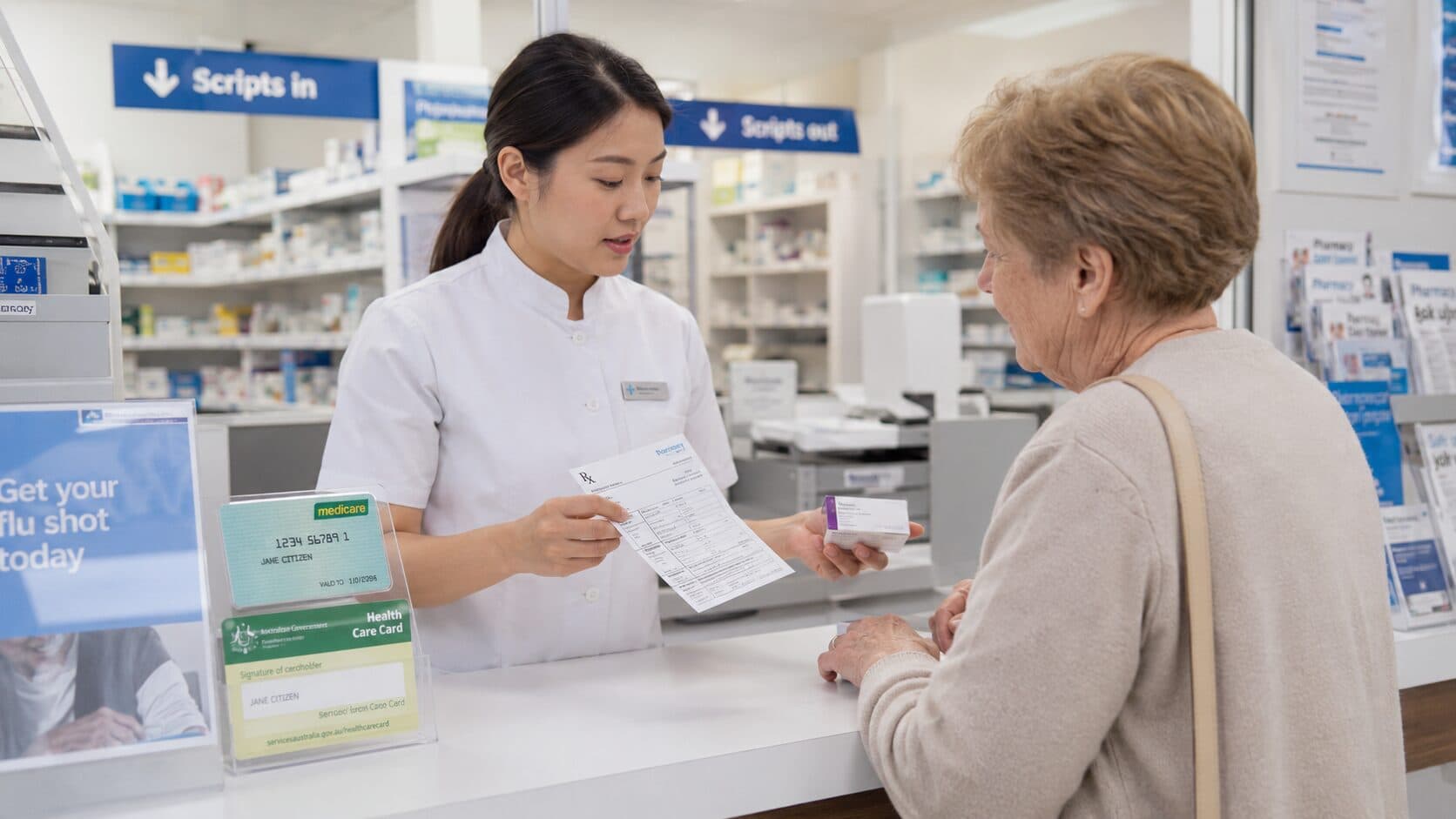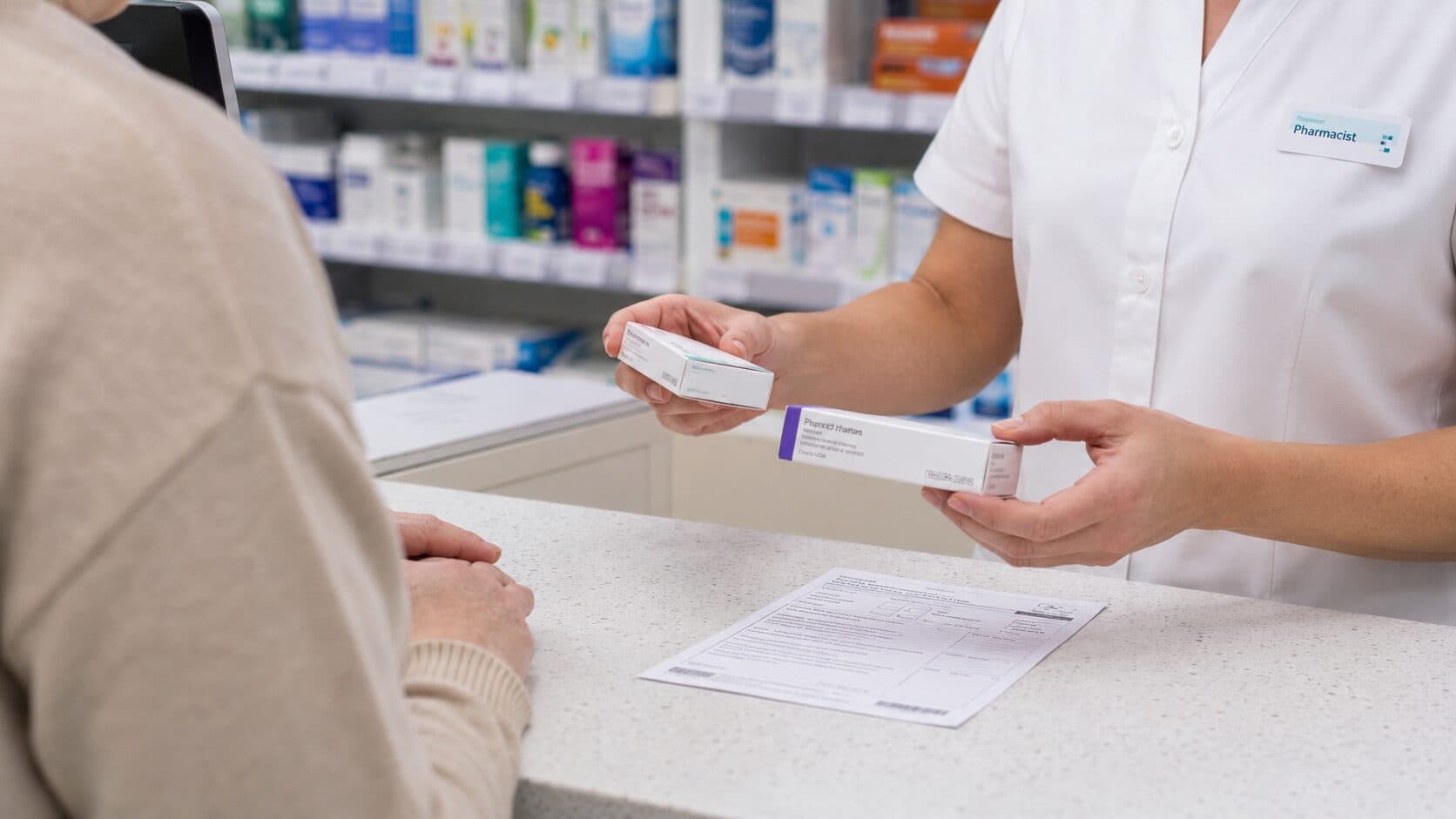
Department of Veterans' Affairs (DVA) Gold and Orange cardholders, and White cardholders for the medicines their card covers, pay the same concessional rate as other concession card holders, $7.70 a script in 2026, for medicines on the Pharmaceutical Benefits Scheme (PBS) or the Repatriation Pharmaceutical Benefits Scheme (RPBS) (PBS explanatory notes on patient charges). Like other concession holders, they usually stop paying the co-payment once the family reaches the PBS Safety Net for the year, although any brand premium still applies. The RPBS covers a number of items the PBS does not, available only to DVA cardholders. The concessional co-payment stays at $7.70 through 2029, according to the PBS fee notes. For how the wider scheme works, see our PBS guide and our concession card savings guide.
General information, not medical advice
This guide explains how things work in general. It cannot tell you what is right for you, so check anything that affects you with your pharmacist or GP.
Always read the label and follow the directions for use.
Based on official Australian government and health sources. Rules can change.
Which DVA card you hold
DVA issues three cards, and the pharmacy entitlement depends on which one you hold.
| Card | Who holds it | At the pharmacy |
|---|---|---|
| Gold | Veterans, war widows and widowers, and certain dependants with full entitlement | All clinically required medicines, any condition, at $7.70 |
| White | Veterans with accepted (service-related) conditions | $7.70 for accepted conditions; standard PBS rates for anything unrelated |
| Orange | Older British Commonwealth and allied veterans, pharmaceuticals only | PBS and RPBS medicines at $7.70; no other health cover |
DVA Veteran Card and clik.dva.gov.au, 2026 co-payment figures.
The Gold Card covers every clinically required medicine, whether or not the condition is service-related. The White Card covers only accepted conditions; for anything unrelated, the holder uses Medicare and the PBS like any other Australian, at the general or concessional rate their other cards allow. The Orange Card, formally the Repatriation Pharmaceutical Benefits Card, is a pharmaceuticals-only card for British Commonwealth and allied veterans who served in the World Wars and meet an age and residency test; it covers prescriptions, wound-care items, and nutritional supplements, but no treatment. From July 2026, DVA is re-issuing Gold and White cards with a new look and the same entitlements, and current cards stay valid until the new ones arrive (DVA Veteran Card).
What you pay, and the brand-premium rule
The concessional co-payment is $7.70 a script in 2026 for both PBS and RPBS items. One point is worth knowing: the $7.70 covers the lowest-priced brand of a medicine. If you or your prescriber choose a more expensive brand where a cheaper equivalent exists, you pay the difference on top, the same brand premium any patient pays. Once your family's PBS and RPBS spending for the calendar year reaches the concessional Safety Net threshold, $277.20 in 2026, your pharmacist can issue a Safety Net card, and you then pay no co-payment on PBS and RPBS scripts for the rest of that year, apart from any brand premium, until it resets on 1st January (PBS Safety Net, Services Australia). You keep your own record of spending on the PBS/RPBS Safety Net prescription record form (PB240) or on printouts from your pharmacy, which matters if you use more than one pharmacy (PBS Safety Net explanatory notes).
What the RPBS adds
The RPBS is a companion list to the PBS, open only to DVA cardholders. It covers the PBS range plus some items the PBS does not, including certain wound dressings (RPBS explanatory notes). It is funded by DVA and runs through the same pharmacy dispensing systems as the PBS, so nothing looks different at the counter; you present your card and the system applies the right scheme. If a prescriber wants a medicine that is on neither list, DVA can approve it case by case through its prior-approval process, and the pharmacy dispenses once that approval is recorded.
How to use your DVA card at the pharmacy
- Your DVA card, either the physical card or the digital version in the MyService app.
- Your prescription, whether an eScript token (the code your prescriber sends to your phone), a paper script, or your Active Script List (the digital list of your current scripts).
- Photo identification, if the pharmacy does not already have you on file.
At the counter, the pharmacist enters your DVA number, the system checks your card type and the medicine against the eligible list, and the co-payment is applied, or no co-payment if you have already passed the Safety Net and hold a Safety Net card. If an item is not covered on your card, for instance an unrelated condition on a White Card, it is charged at the standard PBS rate instead, and the pharmacist can explain why a particular medicine was priced one way rather than the other.
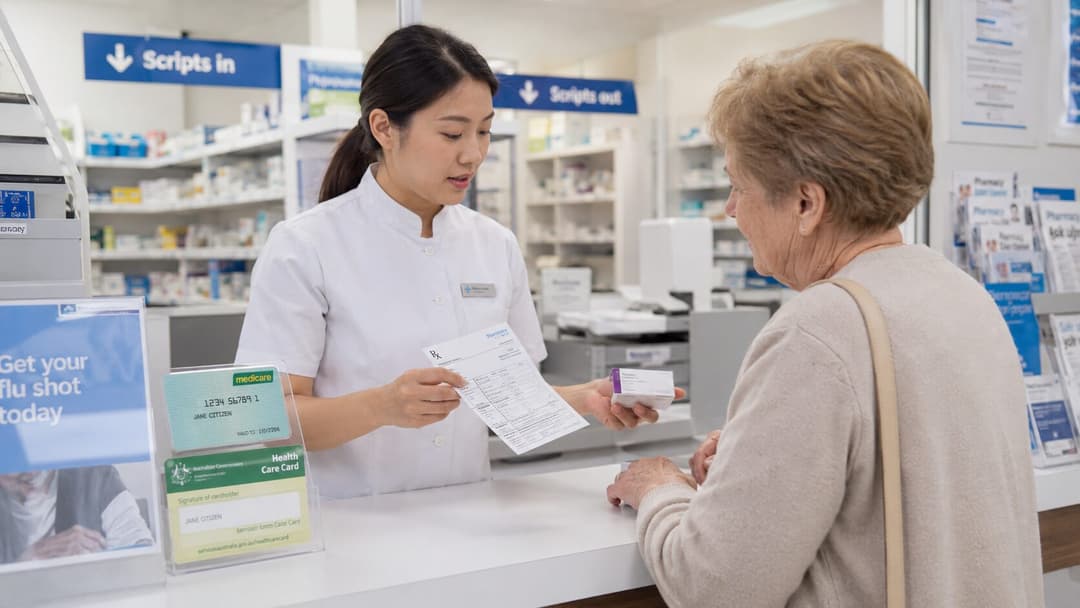
There is no separate veterans' pharmacy to find. The same dispensing system runs both schemes, so a DVA card works at essentially any community pharmacy in Australia.
If you go into hospital
If you are admitted to hospital, it is worth telling the admitting staff you hold a DVA card. On discharge you may be given a short supply to get you started, and your ongoing scripts then go to your community pharmacy at the usual $7.70 rate. The exact arrangements depend on the hospital and your card, so the ward pharmacist is the right person to check the detail with before you leave.
Talk to someone now
Free advice for questions about a medicine, dose, or interaction.
Frequently asked questions
Every clinically required medicine on the PBS or the RPBS, at the concessional rate of $7.70 a script in 2026. Once your family passes the concessional PBS Safety Net for the calendar year and you have a Safety Net card, you pay no co-payment on the remaining PBS and RPBS scripts, apart from any brand premium.
Only for medicines that treat an accepted, service-related condition. For anything unrelated, a White Card holder uses standard PBS arrangements at the general or concessional rate, whereas the Gold Card covers all conditions without that restriction.
The PBS subsidises medicines for all eligible Australians. The RPBS is a parallel list for DVA cardholders that covers the same medicines plus a small number of extra items and prescribing pathways specific to veterans.
DVA Gold and Orange cardholders count as concession card holders for the Safety Net. A White cardholder is a concessional patient only for RPBS prescriptions, unless they also hold a Centrelink concession card, and the PBS sets special rules for how a White cardholder's scripts count toward the Safety Net. The threshold is $277.20 per family for the calendar year in 2026; once you pass it and your pharmacist issues a Safety Net card, you pay no co-payment on PBS and RPBS scripts for the rest of the year, apart from any brand premium, and the count resets on 1st January (PBS Safety Net explanatory notes).
The RPBS items are listed on the PBS website, alongside the PBS schedule. Your prescriber and pharmacist can confirm whether a specific medicine is covered on your card, or you can call DVA on 1800 VETERAN (1800 838 372).