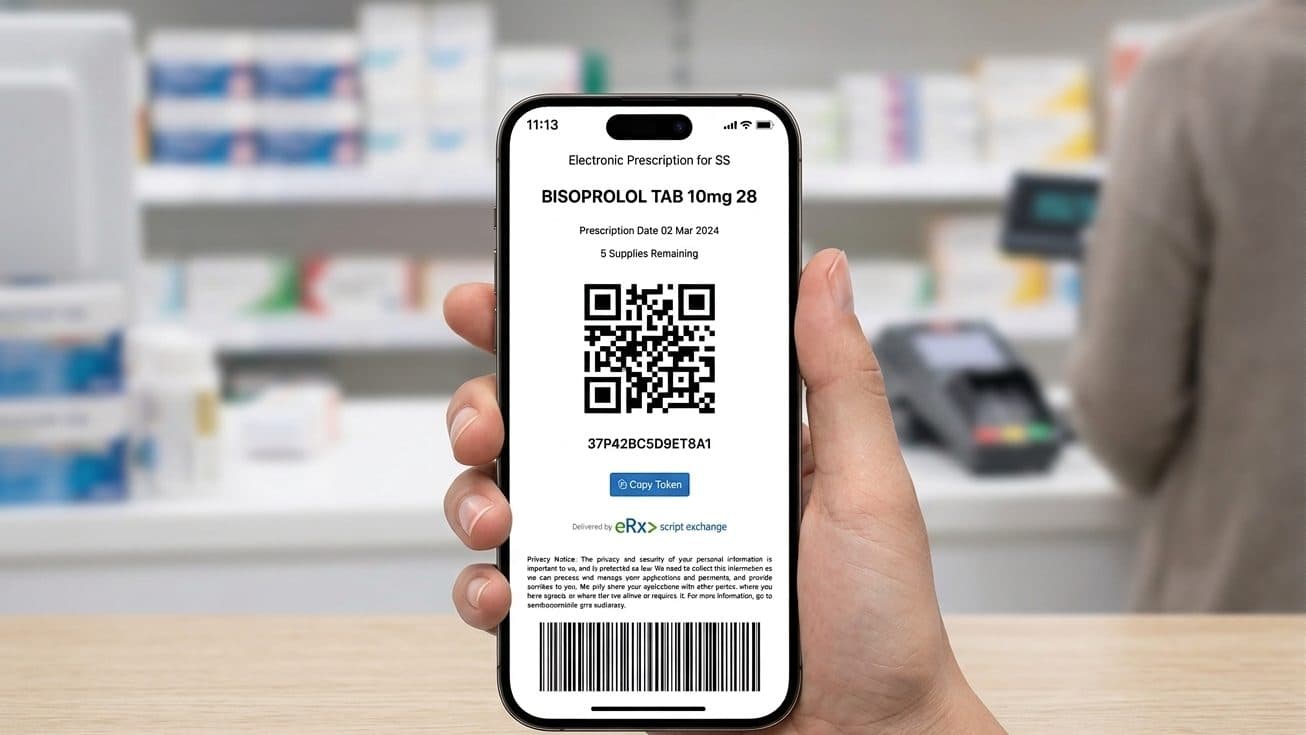
Perhaps your doctor is away, the clinic is booked out, or you are travelling and your last repeat ran out sooner than you expected. If you take a medicine every day for a long-term condition, you may not be able to wait for an appointment.
General information, not medical advice
This guide explains how things work in general. It cannot tell you what is right for you, so check anything that affects you with your pharmacist or GP.
Always read the label and follow the directions for use.
Based on official Australian government and health sources. Rules can change.
In many cases a pharmacist can help. Under a national arrangement called Continued Dispensing, a pharmacist can give you one supply of a regular PBS medicine without a new prescription, at the usual PBS price, as long as you have been taking it and your doctor cannot be reached.
Try your doctor first
The Department of Health, Disability and Ageing says that if you cannot see a doctor in person, you should first check whether a telehealth appointment is possible. A short phone or video consultation can end with an electronic prescription sent to your phone, and that gives you a proper prescription rather than a one-off supply. Healthdirect notes that you need to ask for an eScript during the appointment, so mention it when you book.
Continued Dispensing is for when that is not possible, because your doctor cannot be contacted or cannot send you an electronic prescription.
How Continued Dispensing works
Continued Dispensing is meant to keep a treatment you are already on going without a break, which is why the pharmacist needs to see that you have been taking it.
The conditions are set out on the PBS website. Before they can help, the pharmacist has to be satisfied that all of these apply:
- You need the medicine now, and your doctor cannot be contacted or cannot send you an electronic prescription
- The medicine was last supplied to you within the past three months
- Your condition is stable and you have been taking the medicine regularly
- You have not had that medicine through Continued Dispensing, from any pharmacy, in the past 12 months
- It is safe and appropriate for you to have it
You will be asked to sign a short declaration agreeing to the supply. Afterwards the pharmacist writes to your usual doctor to explain what was supplied and why, so your doctor knows what has happened.
Which medicines are included
The scheme mainly covers medicines for long-term conditions, including asthma and other lung conditions, diabetes, high cholesterol and heart disease. The contraceptive pill and HIV medicines are also included. The full list is set out in Commonwealth law, and pharmacy software flags each medicine that qualifies, so the quickest way to check yours is to ask the pharmacist. Medicine laws where you live also apply, so a medicine has to be allowed under both.
Medicines that carry a risk of misuse or dependence are not suitable for the scheme. These include opioid pain medicines, sleeping tablets, benzodiazepines, stimulants, pregabalin and quetiapine. If you run out of one of these, you will need to contact your doctor or another prescriber.
How much you get and what it costs
You get the normal PBS quantity for that medicine, not extra. The amount depends on the prescription you had last time.
| Your last prescription | What you can get |
|---|---|
| A one-month prescription | One month's supply |
| A 60-day prescription | Two months' supply |
You pay the usual PBS co-payment, the same as you would with a prescription. According to the Department's PBS co-payments page, that is at most $25 in 2026, or $7.70 with a concession card, plus any brand premium, and less if you have already reached the PBS Safety Net for the year. In most cases the supply also counts towards your Safety Net, just as a normal prescription would.
Once a year for each medicine
You can only have Continued Dispensing for the same medicine once in any 12 months, and that limit applies across every pharmacy, not just one. WA Health's guidance for pharmacists sets out the same once-a-year rule. It is meant for a genuine gap in your supply, so book in with your doctor for a new prescription soon afterwards. Our guide to repeat prescriptions explains how to keep your supply going. You do not need a prescription to cover the supply you were given, but you will need one for the next.
Going to the pharmacy
If you can, go to the pharmacy you usually use. They will have a record of when you last collected the medicine, which is one of the things the pharmacist needs to check. If you go somewhere else, take the empty box or your old prescription with you, so the pharmacist can see the medicine name, the strength and when it was last supplied.
Continued Dispensing gives you the usual PBS quantity of a regular medicine at the usual PBS price, for times when your doctor cannot be reached. Book a doctor's appointment for your next prescription.
During floods, fires and other disasters
When a natural disaster cuts people off from their doctors, the government can widen the rules for the affected areas for a short time. According to the PBS website, after the New South Wales bushfires in December 2025, for example, it allowed most General Schedule PBS medicines to be supplied this way to people in six affected council areas until 31 January 2026. If you are in a disaster area, ask your pharmacist whether a temporary arrangement applies.
Talk to someone now
Free advice for questions about a medicine, dose, or interaction.
Frequently asked questions
Yes, for many regular PBS medicines, once in 12 months, if you have been taking the medicine, you were last supplied it within three months, and your doctor cannot be reached. The pharmacist decides whether it is safe.
No. Opioid pain medicines and other medicines with a risk of misuse or dependence are not suitable for Continued Dispensing. You will need a prescription.
Yes. The pharmacist must let your usual doctor know in writing what was supplied and why.
No. You pay the usual PBS co-payment, and in most cases it counts towards your Safety Net.
Not for the same medicine. It can only be used once in 12 months for each medicine, so you will need a new prescription. A telehealth appointment is often the quickest way to get one.