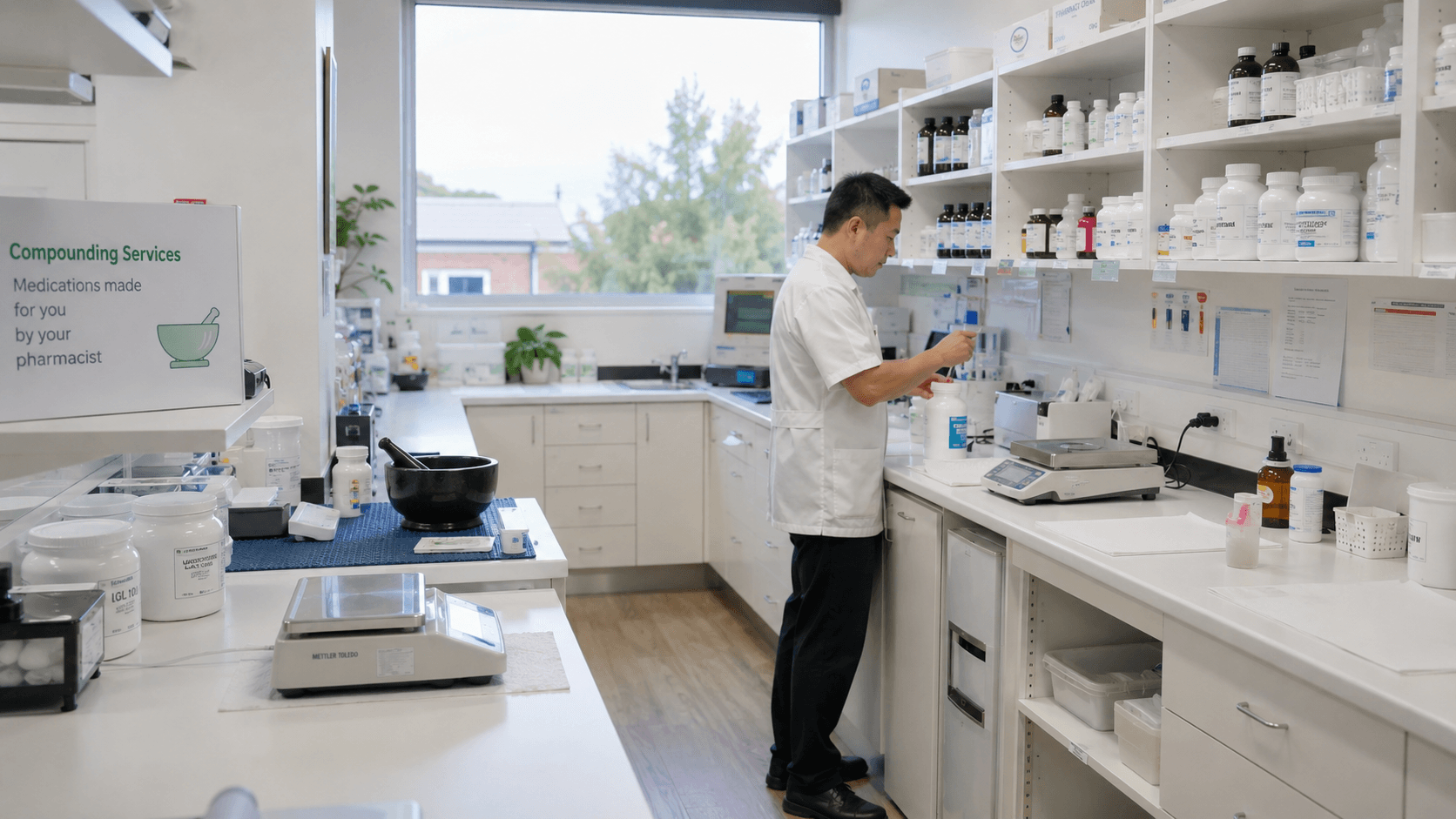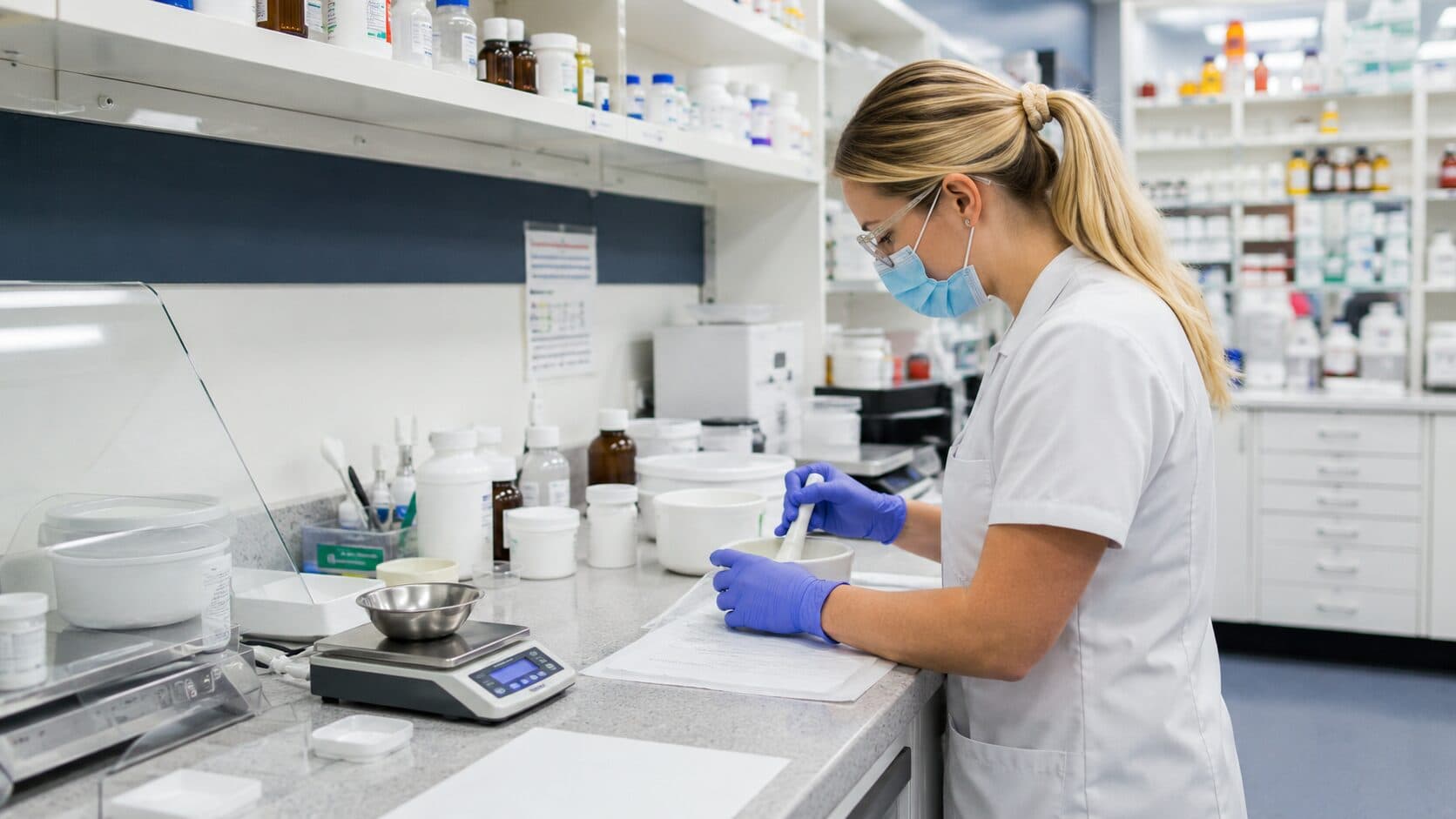
If your medicine has been discontinued, or you need it in a strength or form you can actually take, a compounding pharmacy makes it to order. There are not many of them, and most sit in the capital cities and larger regional centres. The right one depends on what you need prepared, since paediatric, veterinary, hormone, dermatology, and sterile injectable work are each a slightly different specialty. For what compounding is and how it is regulated, see our pillar guide on compounding pharmacy in Australia.
General information, not medical advice
This guide explains how things work in general. It cannot tell you what is right for you, so check anything that affects you with your pharmacist or GP.
Always read the label and follow the directions for use.
Based on official Australian government and health sources. Rules can change.
Three ways to find one
There are three reliable routes, and any is a good place to start. You can filter the Pharmacy Finder directory for pharmacies offering compounding and then narrow by your state or suburb. You can ask your prescriber, since the general practitioner (GP), specialist, or vet who writes a compounded script usually knows which pharmacies meet the standard and prepare what you need. Or you can contact the Australian Society of Compounding Pharmacists (ASCP), an association representing compounding pharmacists, through ascp.net.au; membership is voluntary, and its website does not currently publish a public list of members. Whichever route you use, every pharmacist who compounds must be registered with the Pharmacy Board of Australia, and you can check a pharmacist's registration on the public register at ahpra.gov.au before you order. The pharmacy premises are approved separately by each state or territory's pharmacy authority, as the Pharmacy Board explains.
What to confirm before you book
Not every compounder offers every service, so the first thing to settle is whether the pharmacy can prepare what your prescription needs. The largest divide is sterile versus non-sterile. Non-sterile compounding covers capsules, creams, gels, liquids, troches, suppositories, and most paediatric and veterinary preparations, and most compounders do it. Sterile compounding covers injectables, eye preparations, and some inhalations; under the Pharmacy Board's Guidelines on compounding of medicines it needs specialised facilities and specific competencies, so far fewer pharmacies are equipped, and it is worth confirming those facilities before you proceed.
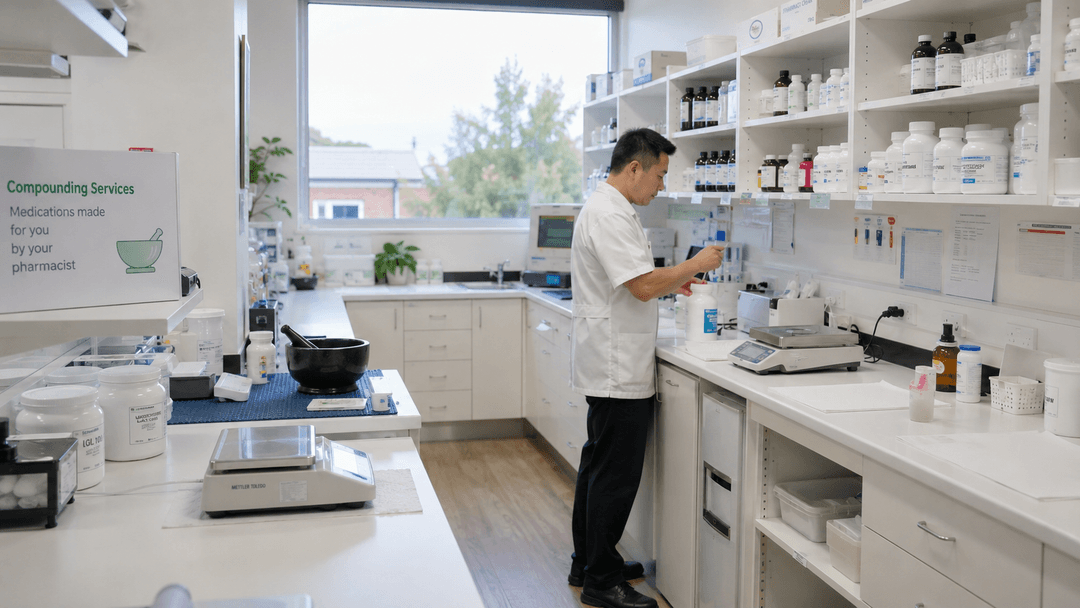
Compounding runs from capsules and creams to sterile injectables, and most pharmacies prepare only part of that range, so confirm yours makes the form your prescription needs.
Specialty is the next question. Some pharmacies focus on paediatric preparations, including liquid suspensions and flavoured solutions for children; others on veterinary compounding for cats, dogs, exotic pets, and horses; others on hormone preparations, dermatology creams, or sterile injectables. One that specialises in hormone work may not regularly do paediatric work, so it pays to match the specialty to your need. A few substances are restricted rather than a matter of specialty: from 1st October 2024, changes to the Therapeutic Goods Regulations, made on advice from the Therapeutic Goods Administration (TGA), removed medicines containing GLP-1 receptor agonists (used for weight loss and diabetes) from the pharmacy compounding exemption, as the Australian Government announced, so a compounder cannot prepare those on request.
Once the clinical fit is clear, a short call settles the logistics.
- How long the preparation takes, from script to ready.
- Whether they hold the ingredients or order them once your script arrives.
- Whether they post the preparation or you collect it.
- How long it keeps and how it needs to be stored.
- The price, quoted before they start.
Where compounders cluster, by city
Compounders concentrate in the capitals, thinning out with distance, so where you live shapes whether you visit in person or rely on postal supply.
| City | Compounder concentration | Regional access |
|---|---|---|
| Sydney | Many, across Greater Sydney | Extends to the Central Coast and Illawarra |
| Melbourne | Strong, across the metropolitan area | Metropolitan coverage, postal supply beyond |
| Brisbane | Spread across the CBD and inner, northern and southern suburbs | Gold Coast and Sunshine Coast catchments covered |
| Perth | Well established across the metropolitan area | Some regional centres, postal supply beyond |
| Adelaide | Inner, eastern and western suburbs, and the Adelaide Hills | Mount Gambier and Murray Bridge, postal supply beyond |
| Canberra | A small specialist network for the ACT | Sydney compounders by post for less common work |
| Hobart | A limited number | Mainland compounders by post for specialist work |
| Darwin | The most limited | Most patients use mainland compounders by post |
an indicative overview based on pharmacies listed with a compounding service in the Pharmacy Finder directory in September 2026, not a census; every pharmacist who compounds must be registered with the Pharmacy Board of Australia.
To browse compounders in your state, open the directory for your jurisdiction and filter by the compounding service: New South Wales, Victoria, Queensland, Western Australia, South Australia, ACT, Tasmania, or the Northern Territory.
If there is no compounder near you
Regional and rural patients have two routes. The first is postal supply from a capital-city compounder, which most will do for a valid prescription; a preparation that needs refrigeration travels by overnight courier in suitable packaging, so it is worth settling the method, cost, and storage first. The second is a telehealth prescriber with postal supply: the prescription can be sent electronically to a compounder in any state, which then dispatches the medicine, and our guide on eScripts in Australia covers the prescription side. Some compounders limit postal supply to certain states depending on the prescription, so it is worth confirming they can dispatch to your address before you order.
When a compounder is not the answer
Compounding is not always the right route, and a commercial product is sometimes the better option. Where a registered product already exists at the dose and form you need, it has been assessed by the TGA for safety, quality, and efficacy, is usually cheaper, and may be subsidised on the Pharmaceutical Benefits Scheme (PBS). Where the substance is excluded from compounding, like the GLP-1 example above, the pharmacy cannot prepare it. Where you have not yet been assessed by a prescriber, the first step is a consultation, because compounding starts with a prescription. And where the request falls outside what Pharmacy Board guidelines and TGA rules permit a compounder to prepare, the pharmacy will decline. If you are unsure whether compounding fits, your prescriber or a pharmacist can tell you before you pay for a preparation.
Talk to someone now
Free advice for questions about a medicine, dose, or interaction.
Frequently asked questions
The directory's location filter is built for this: choose the compounding service, then your suburb, and it lists the closest. Because most compounders also post, the nearest pin is not your only option.
Usually, yes, though some compounders only dispatch to certain states depending on the prescription, so that is the first thing to confirm. Turnaround and delivery cost are worth asking about at the same time.
No. Many focus on one or two specialties, and sterile injectable work in particular needs specialised facilities, so fewer pharmacies offer it and it is worth asking whether they regularly prepare your type of medicine before you book.
Every pharmacist who compounds must be registered with the Pharmacy Board of Australia and follow its Guidelines on compounding of medicines, in effect since 1st October 2024. You can search a pharmacist's name on the public register at ahpra.gov.au; the pharmacy premises are approved separately by each state or territory's pharmacy authority, as the Pharmacy Board explains.
Then you use one interstate. An eScript reaches any compounder electronically, and your prescriber can name one that regularly supplies your area.