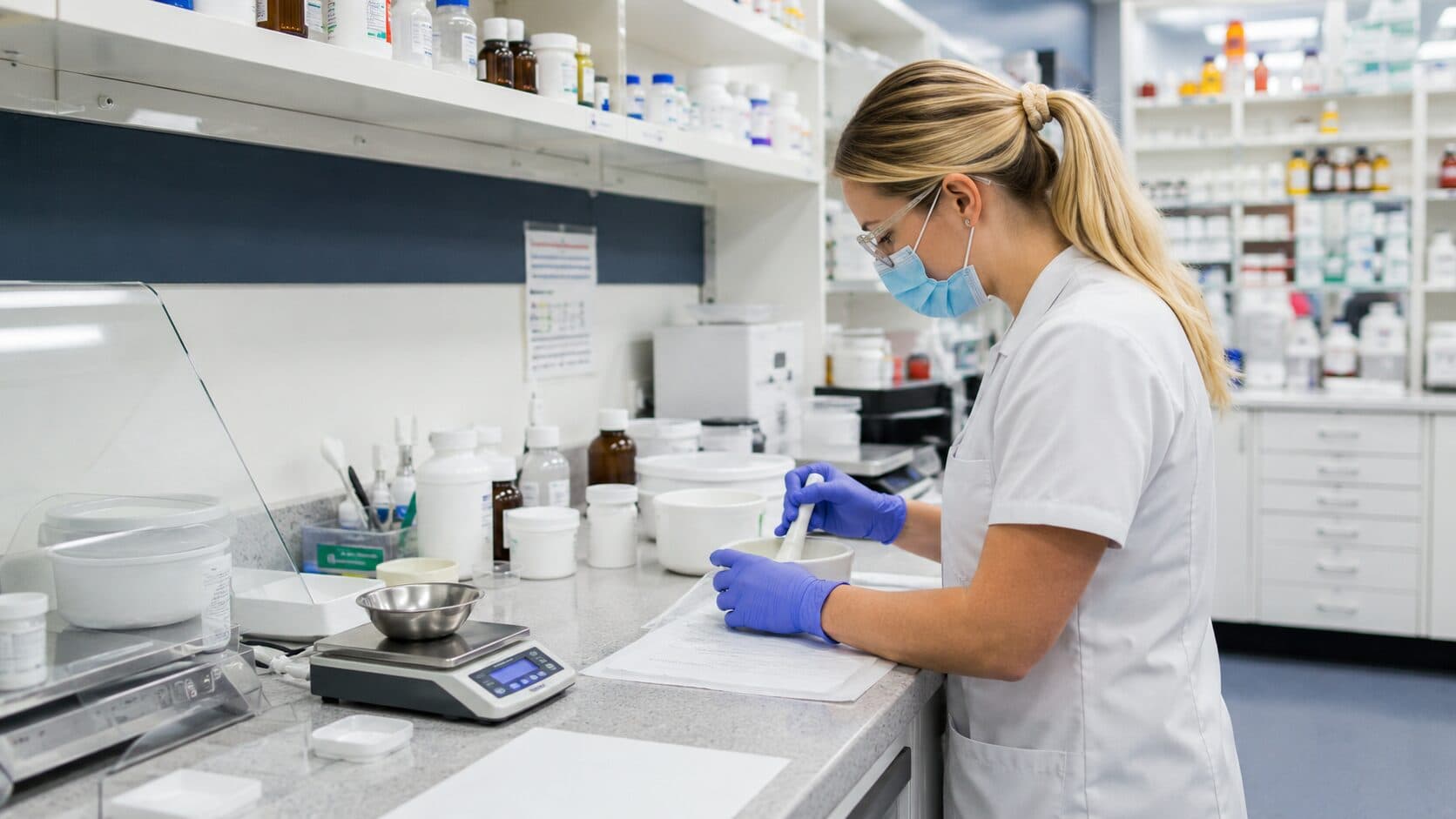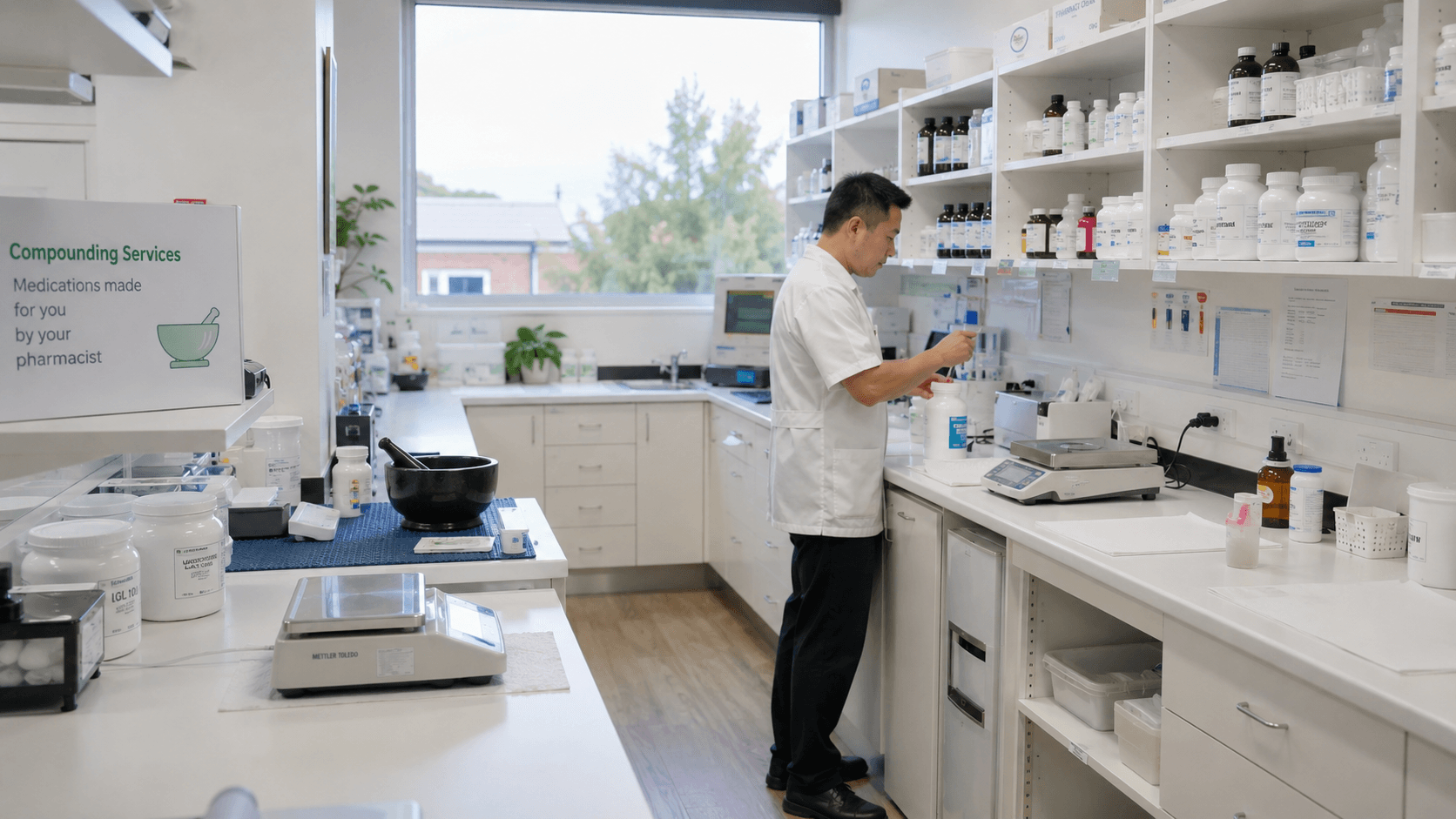
Veterinary compounding is the preparation of a medicine, usually for one animal, on a veterinarian's prescription, by a registered Australian pharmacy. It is used when a commercial product does not fit the species, the dose, or what the animal will accept: a cat that refuses tablets, an exotic pet that needs a dose no manufacturer makes, or a horse that needs a preparation the commercial range does not cover. A registered vet is always the prescriber. For the wider framework, see our pillar guide on compounding pharmacy in Australia.
General information, not medical advice
This guide explains how things work in general. It cannot tell you what is right for you, so check anything that affects you with your pharmacist or GP.
Always read the label and follow the directions for use.
Based on official Australian government and health sources. Rules can change.
When veterinary compounding is used
Most medicines a vet prescribes are commercial products the Australian Pesticides and Veterinary Medicines Authority (APVMA) has registered for the species. Compounding covers the situations those products do not. A vet may write a compounded prescription where there is no commercial equivalent for the species, where the animal needs a dose far below the smallest commercial strength (a guinea pig, a ferret, or a bird, for instance), where palatability is the barrier and a flavoured liquid or gel makes the dose one the animal will take, where two active ingredients are wanted in one preparation, or where a product has been discontinued but is still the right treatment. The vet decides that compounding is the right route; the pharmacy prepares what the vet writes.

A compounded veterinary medicine is usually mixed for the individual patient on the vet's script rather than made in advance, which is why it arrives without a commercial product's box or brand.
The species compounders prepare for
Australian veterinary compounders work across a wide range of animals, though not every pharmacy covers every species: one that regularly prepares cat medicines may not have the equipment or experience for horses. Cats are often given transdermal gels or flavoured liquids when they refuse tablets. Dogs take flavoured chews, liquids, and capsules at custom doses. Exotic pets, from reptiles and birds to rabbits and ferrets, usually need micro-dose suspensions no commercial product supplies. Horses need larger-volume oral pastes and feed powders suited to a 500-kilogram patient, and medicines are occasionally compounded for livestock where commercial products fall short. Because the equipment and experience differ by species, it is worth asking a compounder which animals they regularly prepare for before you order.
Why a vet must prescribe
According to the Pharmacy Board of Australia's Guidelines on compounding of medicines, a pharmacist compounds a veterinary medicine once instructions have been received from a veterinarian, and the Australian Veterinary Association's policy on compounded pharmaceuticals says vets may prescribe one only for an animal under their care. The prescription usually sets out the species, age, and weight of the animal, the active ingredient and strength, the form (a liquid, a capsule, a transdermal gel, or a paste), the dose and frequency, the total quantity, and the owner's details. With a valid script you can take it to any registered compounding pharmacy that prepares veterinary medicines, and some accept scripts from interstate vets registered with the relevant veterinary board. If your animal does not yet have a vet, the first step is a consultation.
Flavours and formats
Getting an animal to accept its medicine is often the whole challenge, so flavour is one of the most common reasons a vet compounds. A medicine an animal refuses does not work. What suits an animal varies: cats, as obligate carnivores, take savoury flavours like fish or chicken rather than sweet ones; dogs generally accept chicken, beef, liver, or peanut butter; horses take apple, molasses, or peppermint in a paste; rabbits and guinea pigs do better with vegetable or hay-friendly bases; and reptiles need little flavouring at all. The compounder confirms what they can prepare when you present the prescription, so it helps to mention any flavour the animal has rejected before.
| Format | Suits | Notes |
|---|---|---|
| Transdermal gel | Cats that refuse oral medicines | Applied to the hairless inner ear; not suitable for every active ingredient |
| Flavoured liquid or suspension | Cats, dogs, exotic pets | Measured with a syringe |
| Flavoured chew | Dogs | The active ingredient is set into a treat |
| Oral paste | Horses | A syringe-style applicator graduated by weight |
| Capsule | Animals that swallow reliably | Often given in food |
illustrative; the prescribing vet and the compounder choose the format together, and options vary by pharmacy and animal.
How the rules work
Compounded veterinary medicines sit under a different framework to registered animal products. The APVMA registers commercial veterinary products, but according to the Pharmacy Board of Australia's Guidelines on compounding of medicines, compounded medicines are not defined as veterinary chemical products under the Agricultural and Veterinary Chemicals Code, so they are exempt from APVMA registration. Unlike registered veterinary products, they are not required to be assessed for quality, safety, efficacy or stability. The pharmacist who compounds is regulated by the Pharmacy Board of Australia and those guidelines, in effect since 1st October 2024. The use of unregistered veterinary medicines falls under state and territory control-of-use laws (for example, Agriculture Victoria's rules on off-label use), and the Australian Veterinary Association's 2020 guidelines on compounded pharmaceuticals set the professional expectations for vets. The vet holds the clinical decision, the pharmacist is responsible for the preparation, and you store and give the medicine as the label and the vet direct.
How to find a veterinary compounder
The quickest route is your own vet, since many practices already work with one or two compounders they trust. You can also search the Pharmacy Finder directory for pharmacies offering compounding and ask whether they prepare veterinary medicines. A short call before you commit confirms the fit.
- Whether they regularly prepare veterinary, not only human, medicines.
- Whether they cover your animal, whether a cat, an exotic pet, a horse, or livestock.
- Whether they can prepare the form your vet wants, whether a transdermal gel or a flavoured liquid.
- How long the preparation takes, and whether they post it or you collect.
For locating compounders more generally, our guide on finding a compounding pharmacy by city maps where they cluster.
Talk to someone now
Free advice for questions about a medicine, dose, or interaction.
Frequently asked questions
No. Compounding starts with the vet: they make the clinical call and write the script, and without one the pharmacy has nothing to work from.
It varies with the species, the ingredient, and the form, and equine or exotic-species work can cost more for the extra volume or specialist preparation. Compounded animal medicines are private, so it is worth asking the pharmacy for a price before ordering; some pet-insurance policies refund part of it.
Many can, because the same Pharmacy Board registration and compounding guidelines cover both. Not all do it regularly, so it is worth checking first.
Experience shows in the questions a compounder asks: a vet-ready pharmacy will want the species, the weight, and the vet's exact preparation, and will talk through flavours and formats for that animal. Your vet can usually name one that does this regularly.
Many post to regional and rural customers. Some preparations need refrigeration, dark storage, or particular packaging, so it is worth settling the postage and storage details when you order.