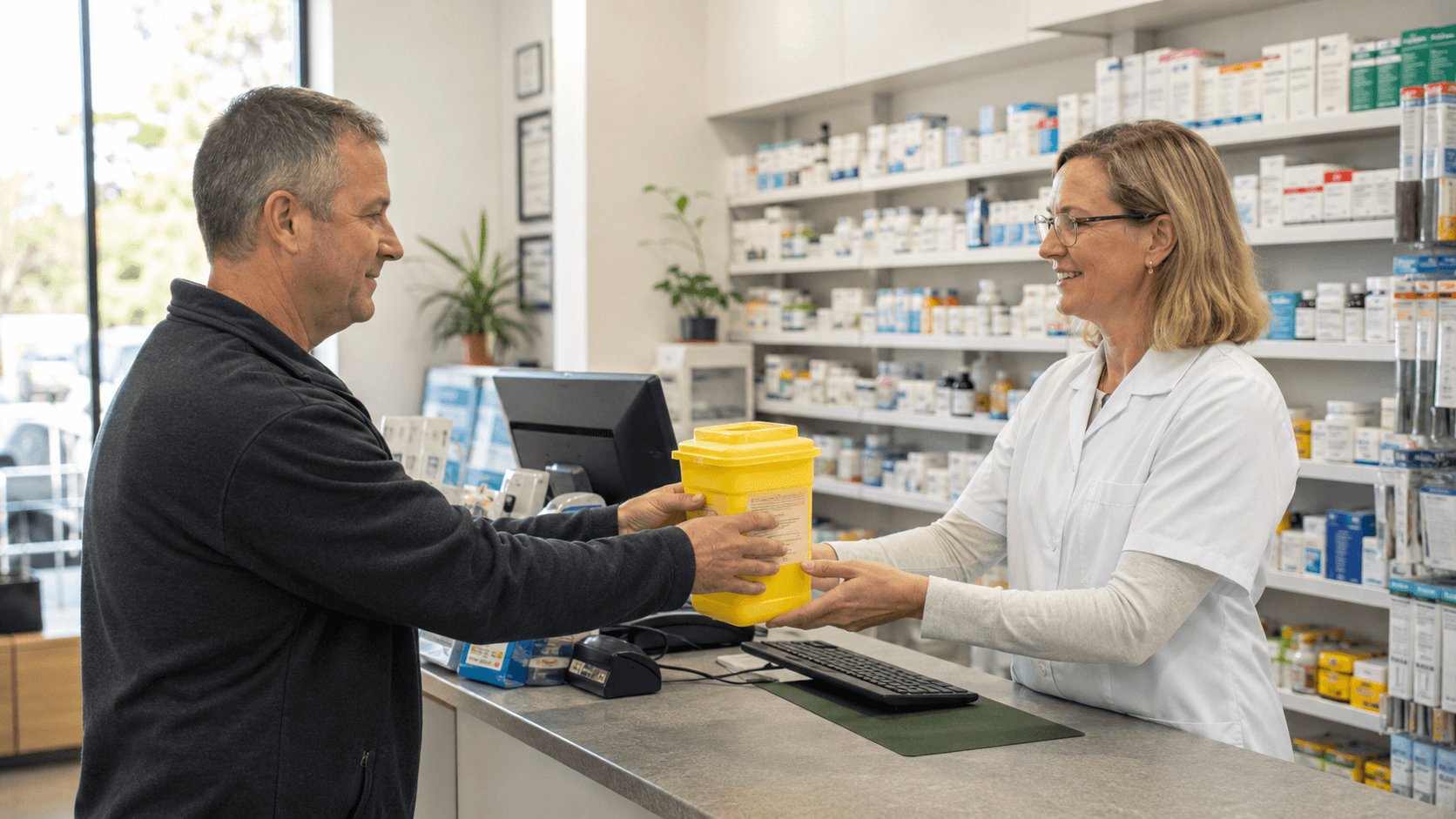
The Poisons Information Centre on 13 11 26 is the national service for a suspected poisoning, an accidental swallowing, or a medicine taken the wrong way. It is answered around the clock, from anywhere in Australia, by one of four regional centres. Call 000 first in a life-threatening emergency. For an everyday question about a medicine, your community pharmacist is the right first call during pharmacy hours.
General information, not medical advice
This guide explains how things work in general. It cannot tell you what is right for you, so check anything that affects you with your pharmacist or GP.
Always read the label and follow the directions for use.
Based on official Australian government and health sources. Rules can change.
Healthdirect advises calling 000 and asking for an ambulance if the person is unconscious, has stopped breathing, is having a seizure, or is showing a severe allergic reaction (swelling of the face or throat, difficulty breathing). Where the person is conscious and breathing but a poisoning or a wrong dose is suspected, the poisons centres are reached on 13 11 26.
What the Poisons Information Centre is
The Poisons Information Centre runs one national number, 13 11 26, available 24 hours a day, every day, everywhere in Australia. Your call goes to one of four centres, in New South Wales, Queensland, Victoria, and Western Australia, where a Specialist in Poisons Information answers it. According to the NSW Poisons Information Centre, this specialist is a pharmacist or medical scientist. They work from detailed clinical databases covering prescription and over-the-counter medicines, household chemicals, plants, bites and stings, and industrial substances (Poisons Information Centre, health.gov.au).
When people call the Poisons Information Centre
According to Healthdirect and the poisons centres, there are several situations where 13 11 26 is the number to call: someone has taken more of a medicine than the label or prescription allows; a child has got hold of a medicine, a household chemical, or a plant; a medicine has been taken twice by mistake, or two medicines have been confused; a chemical has splashed into the eyes or onto the skin; or a bite or sting is a worry. It is also the line for when you are caring for someone who has taken too much of a medicine and is conscious and breathing. If you think someone has taken too much of an opioid medicine, the advice is to call 000. In each case the specialist asks structured questions and, based on the substance and the amount, advises whether to watch at home, see a general practitioner (GP), go to an emergency department, or call 000 (Poisoning, healthdirect).
When to call your pharmacist
For the everyday questions that are not emergencies, your community pharmacist is the fastest source of good advice during pharmacy hours: a confusing label, a dose you have missed, a new side effect you want to check, whether an over-the-counter product is safe with your regular medicines, a brand-versus-generic question, or travelling overseas with your medicine. Pharmacists do not usually charge for general medicine advice, whether you walk in, phone, or message through the pharmacy's app. For a non-urgent health question outside pharmacy hours, Healthdirect on 1800 022 222 has a registered nurse available around the clock.
| Situation | The right call |
|---|---|
| Unconscious, not breathing, a seizure, or a severe allergic reaction | 000 |
| Too much of a medicine taken, an accidental swallowing, a double dose, a plant or chemical exposure | 13 11 26, 24/7 |
| A label question, a missed dose, a side-effect check, an over-the-counter interaction | Your community pharmacist, pharmacy hours |
| A non-urgent health question outside pharmacy hours | Healthdirect 1800 022 222, 24/7 |
emergency and poisons routing, healthdirect.gov.au.
What to have ready when you call
Healthdirect advises that there is no need to wait until symptoms appear before calling, and having a few details to hand helps the specialist help you faster.
- The substance, from the label: the brand or generic name, the strength, and the form.
- The quantity taken, even as a best estimate; counting the missing tablets helps.
- The time it was taken, even roughly, for example within the last hour.
- The person: their age, rough weight, health conditions, and any other medicines.
- Any symptoms since, including nausea, drowsiness, agitation, a rash, or pain.
- Anything already done, for example a drink given or advice already sought.
If a household chemical is involved, keep the container with its label while you call, since the specialist may ask about the ingredients. For a plant, having the plant or a clear photo of it nearby can help you describe it to the specialist.
Talk to someone now
Free advice for questions about a medicine, dose, or interaction.
Frequently asked questions
According to the Victorian Government's Better Health Channel, calls from landlines are free and calls from mobile phones may be charged at a higher rate.
Yes. Many calls are about a child who has swallowed something and looks well at the time. The specialist assesses the substance and how much was taken, then advises whether the child can be watched at home, with symptoms to look out for, or needs to see a doctor or go to hospital. The NSW Poisons Information Centre says most accidental poisonings can be watched at home, and it can organise an ambulance if one is needed.
Yes. The Victorian Poisons Information Centre says conversations are confidential and it does not keep a register of people who have called. The NSW centre may ask for your name, phone number and postcode so it can follow up, and says this information becomes part of a confidential medical record.
Healthdirect's first-aid guidance is not to make someone vomit, because it can cause more harm, and to call 13 11 26 for advice on what to do next. The specialist will guide you from there.
The Animal Poisons Helpline on 1300 869 738 is a separate service for pets, and its website lists a fee for consultations. The NSW Poisons Information Centre says 13 11 26 is for people only, so if your pet is unwell or in distress, your vet or the nearest emergency vet is the fastest help.
Yes, for the everyday, non-emergency questions above, during pharmacy hours. If too much of a medicine may have been taken, or for an accidental swallowing or anything time-sensitive, 13 11 26 is the dedicated service.