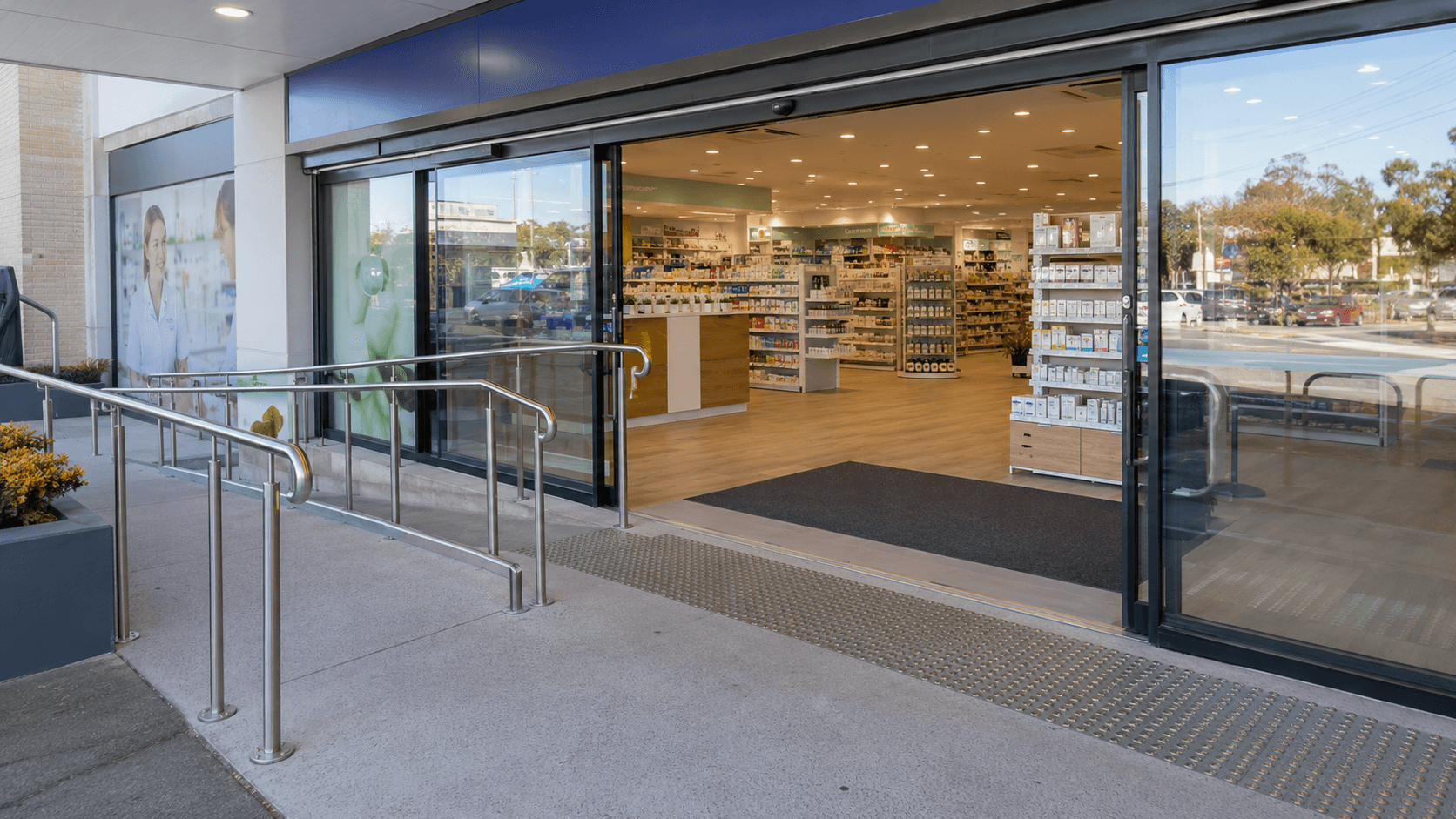
In many parts of Australia, a prescription can be delivered to your front door, sometimes on the same day, without you leaving home. Home delivery has become a normal pharmacy service, and it works from the electronic prescription that many people now receive on their phone.
General information, not medical advice
This guide explains how things work in general. It cannot tell you what is right for you, so check anything that affects you with your pharmacist or GP.
Always read the label and follow the directions for use.
Based on official Australian government and health sources. Rules can change.
An electronic prescription, or eScript, is a digital prescription your prescriber sends by SMS or email as a link to a token, a Quick Response (QR) code that replaces the paper script. The Australian Digital Health Agency explains that you can forward that token straight to a pharmacy, and if the pharmacy offers home delivery your medicine can be sent to you rather than collected (Electronic prescriptions, Australian Digital Health Agency). Our eScripts guide covers the token model in full.
Two factors shape whether delivery works for you. Not every pharmacy delivers, and delivery options can be more limited outside the big cities, where collecting from your nearest pharmacy may be quicker. Some medicines also have extra rules for delivery, which the sections below explain. To see which pharmacies deliver in your suburb, browse pharmacies on Pharmacy Finder.
How to get your medicines delivered
Delivery follows the same path every time, from the token on your phone to the courier at your door. Forwarding your eScript is the quickest route, and it takes four steps.
Source: Electronic prescriptions, Australian Digital Health Agency.
If your prescription has repeats, healthdirect notes that the pharmacist sends you a new token by SMS or email for the repeat, which you show or forward the next time you need the medicine (eScript, healthdirect). An Active Script List, covered below, can save you forwarding each new token. Our repeat prescriptions guide covers how repeats and timing work. If you have a paper prescription, ask the pharmacy whether it can deliver against it and how it needs to receive the prescription.
Home delivery compared with collecting in person
Delivery is not always the better choice, and for a single script you need today, collecting in person can be quicker. This table sets out what each option suits.
| What to weigh | Home delivery | Collecting in person |
|---|---|---|
| Getting there | Medicine comes to you, which helps if you are unwell, working or without transport | You travel to the pharmacy |
| Speed | Depends on the pharmacy, the courier and where you live | Ready within minutes once dispensed |
| Pharmacist advice | By phone or the pharmacy app; ask when you order | Face to face at the counter |
| Fridge and controlled medicines | May need cool packaging, a signed receipt or extra checks, so ask first | Handed over with the usual checks |
| Cost | A delivery fee may apply, and some pharmacies waive it | No delivery fee |
delivery mechanics per Electronic prescriptions, Australian Digital Health Agency and eScript, healthdirect.
For an ongoing medicine you take every day, delivery saves the trip and can be timed to arrive before you run low. For a one-off course, or when you want to talk something through with the pharmacist, the counter is hard to beat.
What can and cannot be delivered
Most everyday medicines travel fine. That covers the majority of Pharmaceutical Benefits Scheme (PBS) prescription medicines, the federally subsidised list most scripts are filled under (Pharmaceutical Benefits Scheme, healthdirect), along with over-the-counter products, medicines for long-term conditions like blood pressure, cholesterol and asthma, wound dressings, and dose administration aids like Webster packs. Our medication management guide covers packed medicines in more detail.
The limits fall into two groups. Controlled medicines, known as Schedule 8, sit under the tightest level of legal control over supply and handling, which healthdirect describes as special rules on how they are produced, supplied, sold, owned and used, with some differences between states and territories (Scheduling of medicines and poisons, healthdirect). In New South Wales (NSW), for example, a pharmacist can send a Schedule 8 medicine by courier but must keep evidence of its delivery, and a Pharmacist Only (Schedule 3) medicine sold without a prescription must be handed to you personally by a pharmacist (Pharmacists frequently asked questions, NSW Health). When you order, it is worth asking whether anything on your script has to be picked up.
Fridge medicines are a category of their own. Insulin and similar medicines rely on a cold chain, meaning they have to stay within a set temperature range from the pharmacy fridge to yours. healthdirect notes that spare insulin should be kept in the fridge and never frozen, and that insulin kept at room temperature (below 25 degrees Celsius) lasts about one month (Insulin and diabetes, healthdirect). For a delivery of one of these medicines, it is worth asking how the pharmacy keeps it cool on the way and making sure someone is home to put it in the fridge.
Because healthdirect says insulin must never be frozen and lasts only about a month out of the fridge, a fridge medicine needs packaging that keeps it cool and someone home to receive it. Left in the heat, it may not work properly.
What to have ready before you order
Having a few details to hand makes the first order quicker, especially if you are setting up delivery for a parent or someone you care for.
- Your eScript token. The SMS or email link your prescriber sent, or your Active Script List if you use one.
- A delivery address. Somewhere a parcel can be received during the day.
- Someone to take it in. Helpful for fridge medicines, and for Schedule 8 medicines, where the courier may need a signed receipt.
- Photo identification. The pharmacy may ask for it when delivering some controlled medicines.
An Active Script List, or ASL, is a digital list of your electronic prescriptions that a pharmacy can view once you give it consent, so you do not need to forward a token each time. The Digital Health Agency notes that if your pharmacy offers home delivery, you do not need to leave your home to receive your medicines (Electronic prescriptions, Australian Digital Health Agency). Our Active Script List guide covers setup.
Someone else can receive your delivery
You do not have to be the one who orders or receives the medicine. The Digital Health Agency explains that you can forward your eScript token to a family member, carer or friend, who can then collect your medicine on your behalf (Electronic prescriptions, Australian Digital Health Agency). For a controlled medicine, it helps to tell the pharmacy in advance who will receive it, because the pharmacist may ask for identification or a signed receipt. Our carer pickup guide covers collecting for someone else.
If you are about to run out
The simplest way to avoid a gap is to order your repeat before the current pack runs low, rather than on your last day, so a slow courier run does not leave you short. Many pharmacies can set up a regular delivery for an ongoing medicine, dispensing and sending the next supply before the current pack finishes.
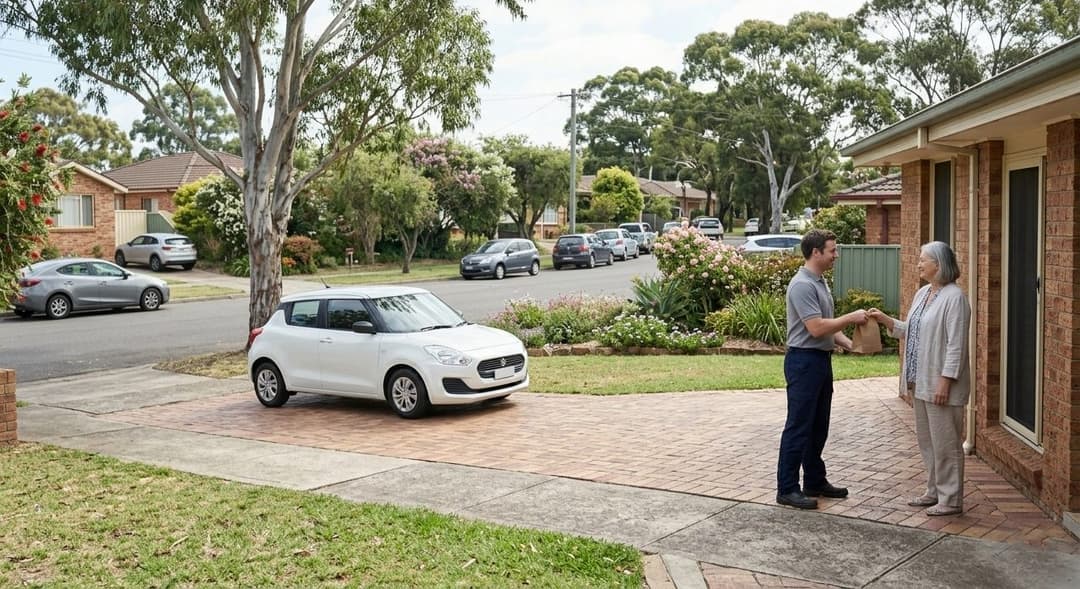
For a medicine you take every day, a regular delivery cycle set up with the pharmacy means the next pack is on its way before you notice the current one running down.
If you have run out and cannot reach your prescriber, a pharmacist can sometimes bridge the gap. The Pharmaceutical Benefits Scheme runs a continued dispensing arrangement that lets a pharmacist supply an eligible medicine once in a 12-month period, mostly for stable long-term conditions like asthma, diabetes, high cholesterol and heart disease, where you have been supplied that medicine in the last three months (Continued dispensing, PBS). The PBS notes it does not cover Schedule 8 controlled medicines. If your medicine qualifies for a two-month script, asking your prescriber about a 60-day prescription also means fewer orders across the year (60-day prescriptions, Department of Health, Disability and Ageing).
What delivery costs
There is no single national delivery price. Each pharmacy and courier sets its own fee, so it varies by area and by how fast you need it, with same-day couriers often costing more than standard post. Some pharmacies waive the fee once an order passes a set value, or for people on regular repeat medicines. If you hold a Department of Veterans' Affairs (DVA) card or extras cover with a private health fund, ask the pharmacy or your fund whether delivery is included, because this differs between providers.
Talk to someone now
Free advice for questions about a medicine, dose, or interaction.
Frequently asked questions
No. Delivery depends on the individual pharmacy and whether it reaches your area, and options can be more limited outside the big cities. The quickest way to know is to check which pharmacies near you list delivery and ask them directly before you forward a script.
It depends on the pharmacy. Delivery can work if the medicine is packed to stay cool and someone is home to put it straight in the fridge. It is worth asking how the parcel is packed and roughly when it will arrive, so it does not sit in a hot car or on a doorstep.
Yes. You can forward your prescription to a trusted family member or carer, or nominate someone to receive the parcel. Tell the pharmacy in advance who will be at the address, and if the medicine is a controlled one, ask whether that person needs to bring anything to prove who they are.
It depends on the pharmacy, the courier and where you live. Some pharmacies deliver locally on the same day, while orders sent by courier or post can take a day or more, so it is worth asking before you order.
You reuse the same prescription rather than getting a new one. If a repeat token has not reached you when a supply is due, contact the pharmacy that filled the last one, since it issues the fresh token. For a medicine you take long-term, ask about a standing delivery so you do not have to reorder each cycle. Find a pharmacy that delivers near you: browse Australian pharmacies.